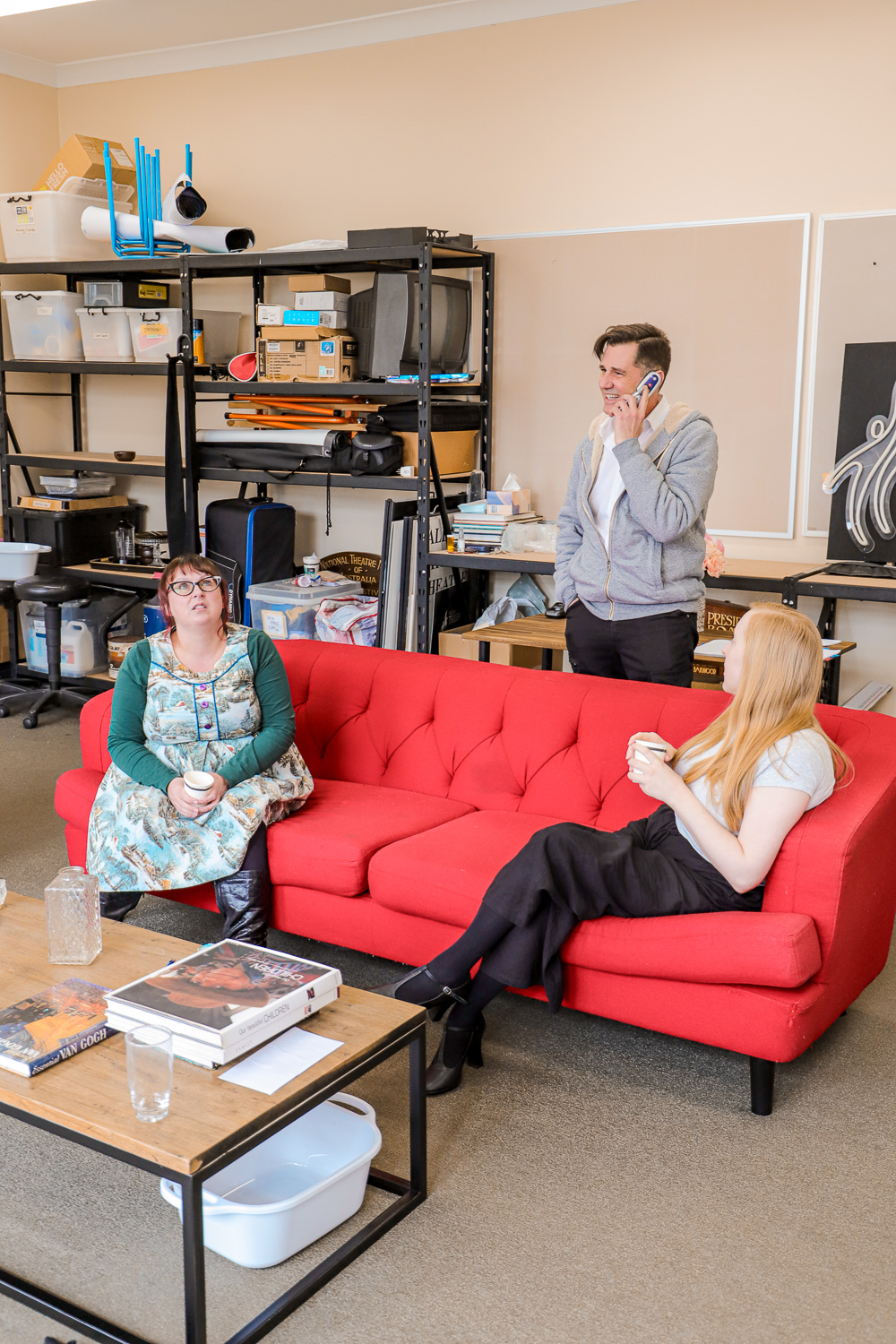
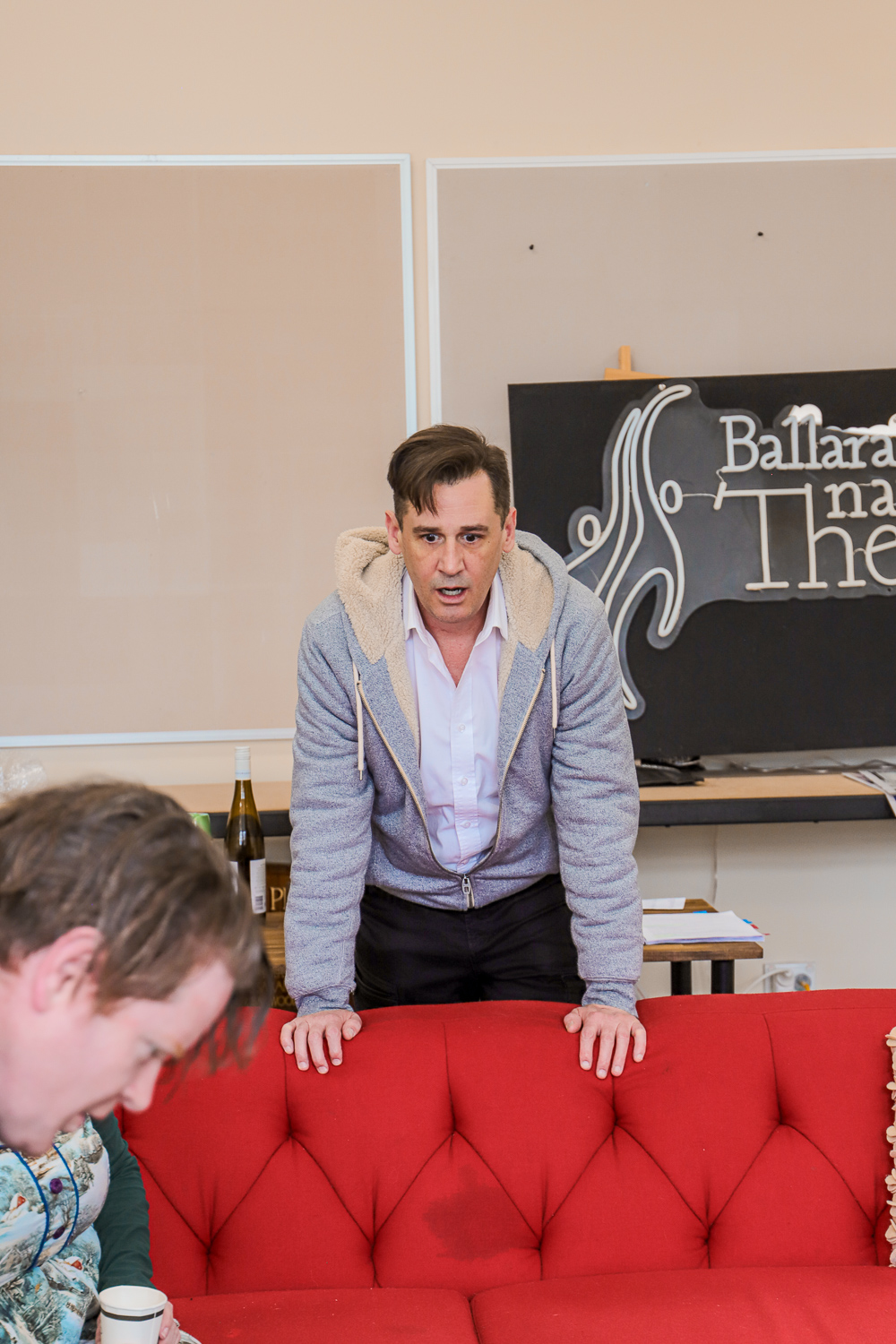
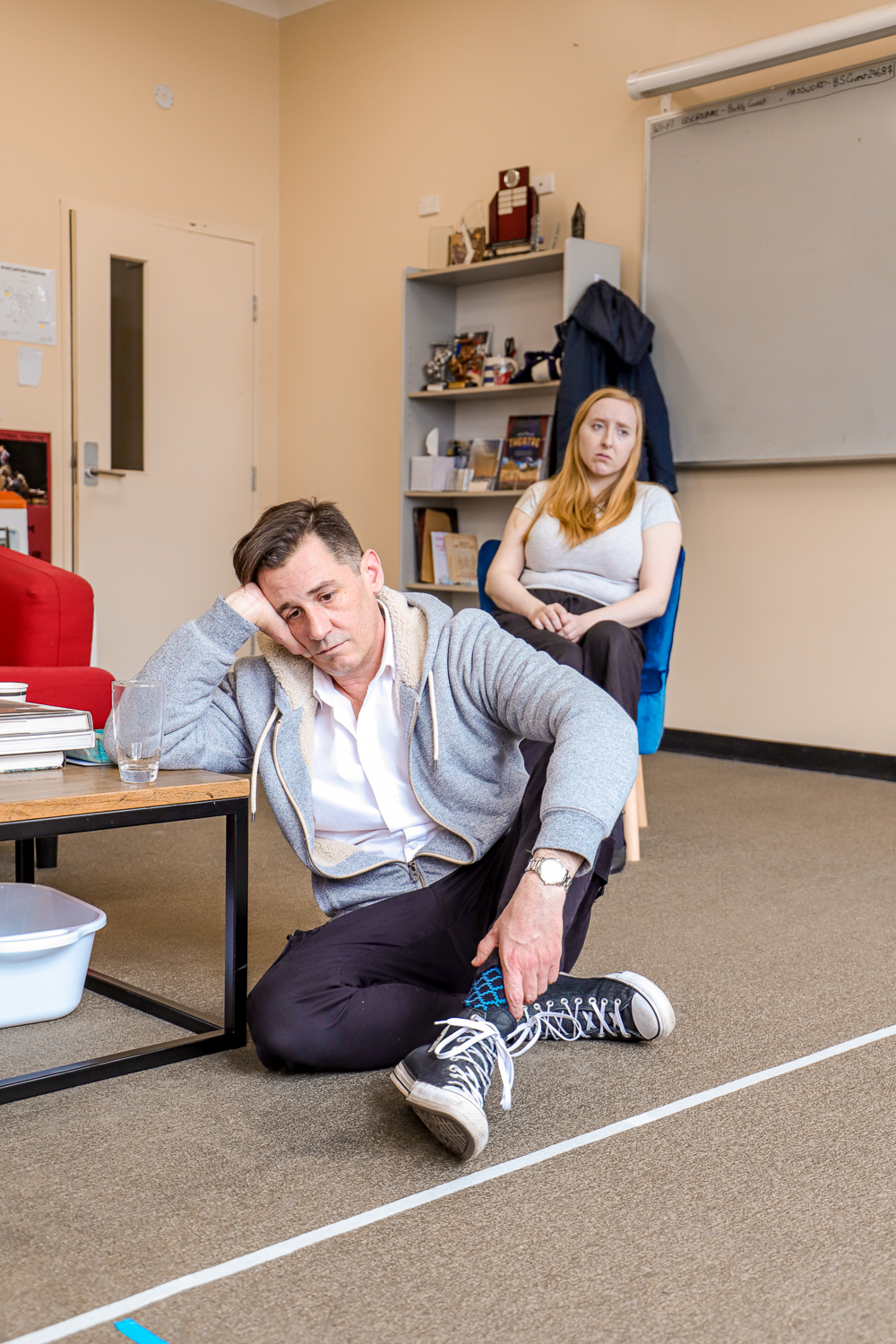
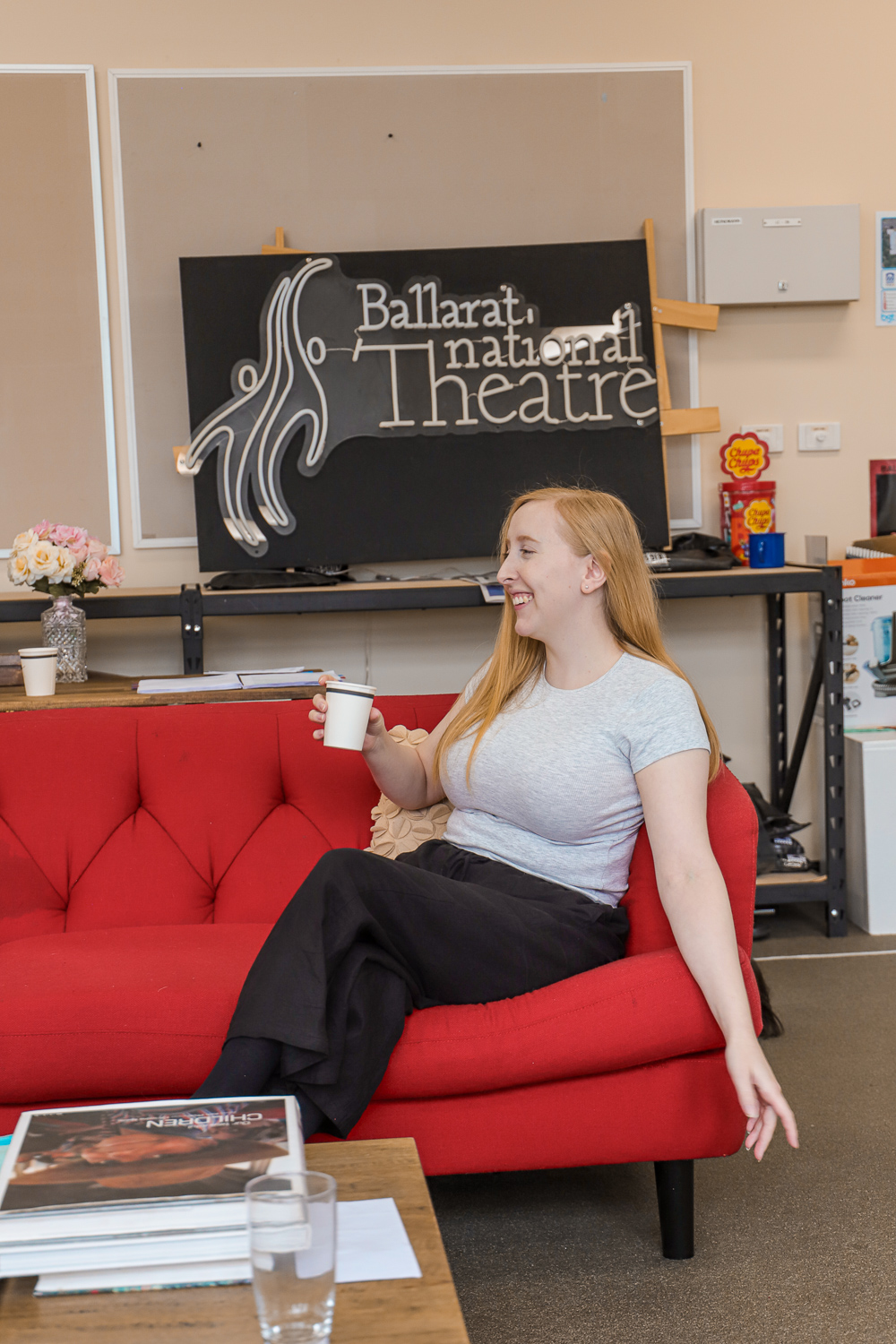
‘God of Carnage’ is a black comedy by French playwright Yasmina Reza, first performed in 2006 and winning a Tony for Best Play for its New York production. It unfolds in real time, without an interval, and takes place entirely in the living room of one married couple. Another couple visits them to discuss matters of importance.
The characters’ names vary between editions and productions. In Christopher Hampton’s widely performed English translation they are usually Veronica and Michael Novak and Annette and Alan Raleigh, as they are here. They are parents of eleven-year-old boys and Benjamin Raleigh has struck Henry Novak. The striker was carrying a stick and hit his friend in the face, knocking out two of his teeth and damaging a nerve, and Henry’s parents have invited Benjamin’s parents to their home to discuss the incident. They hope to resolve it calmly and civilly.
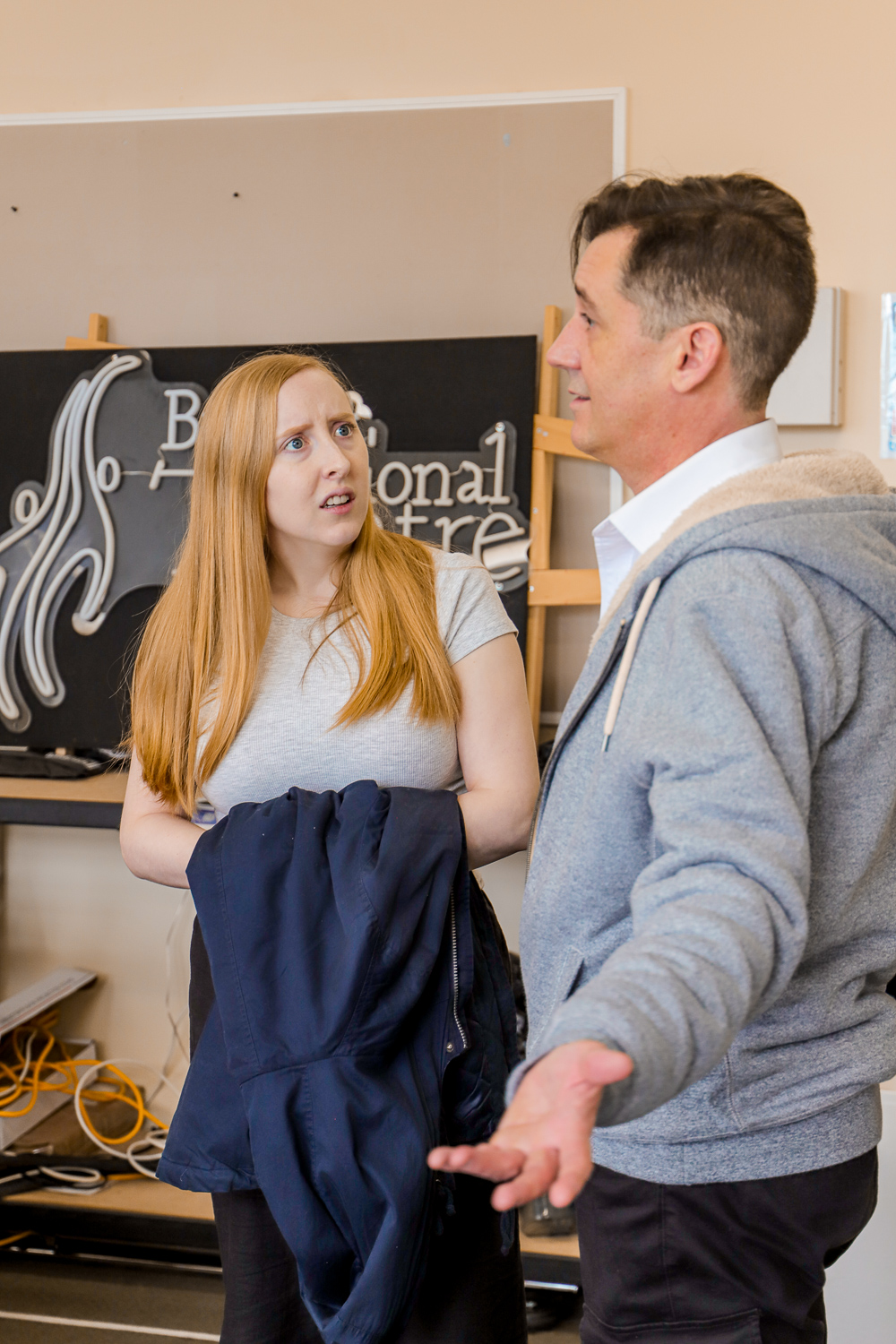
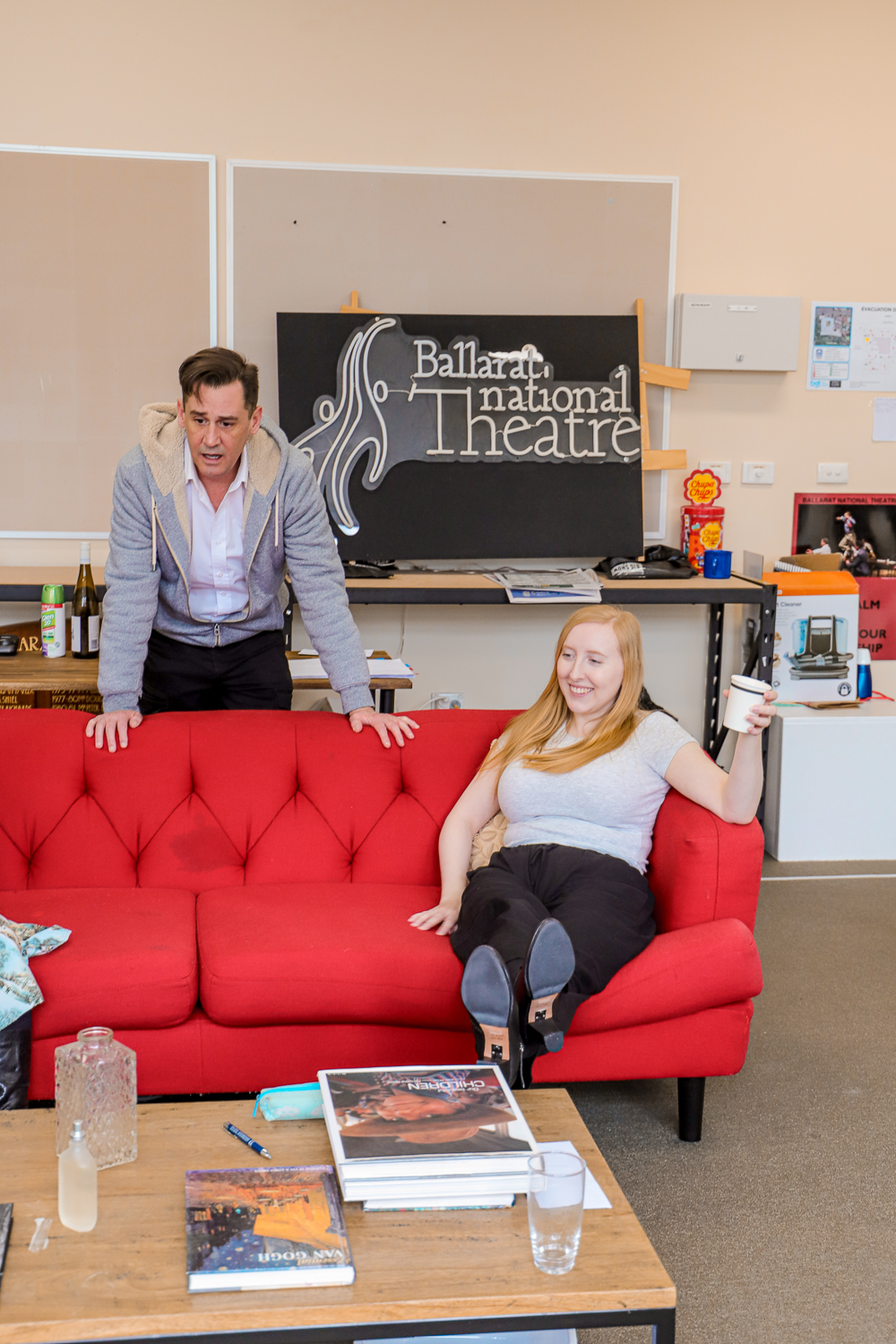
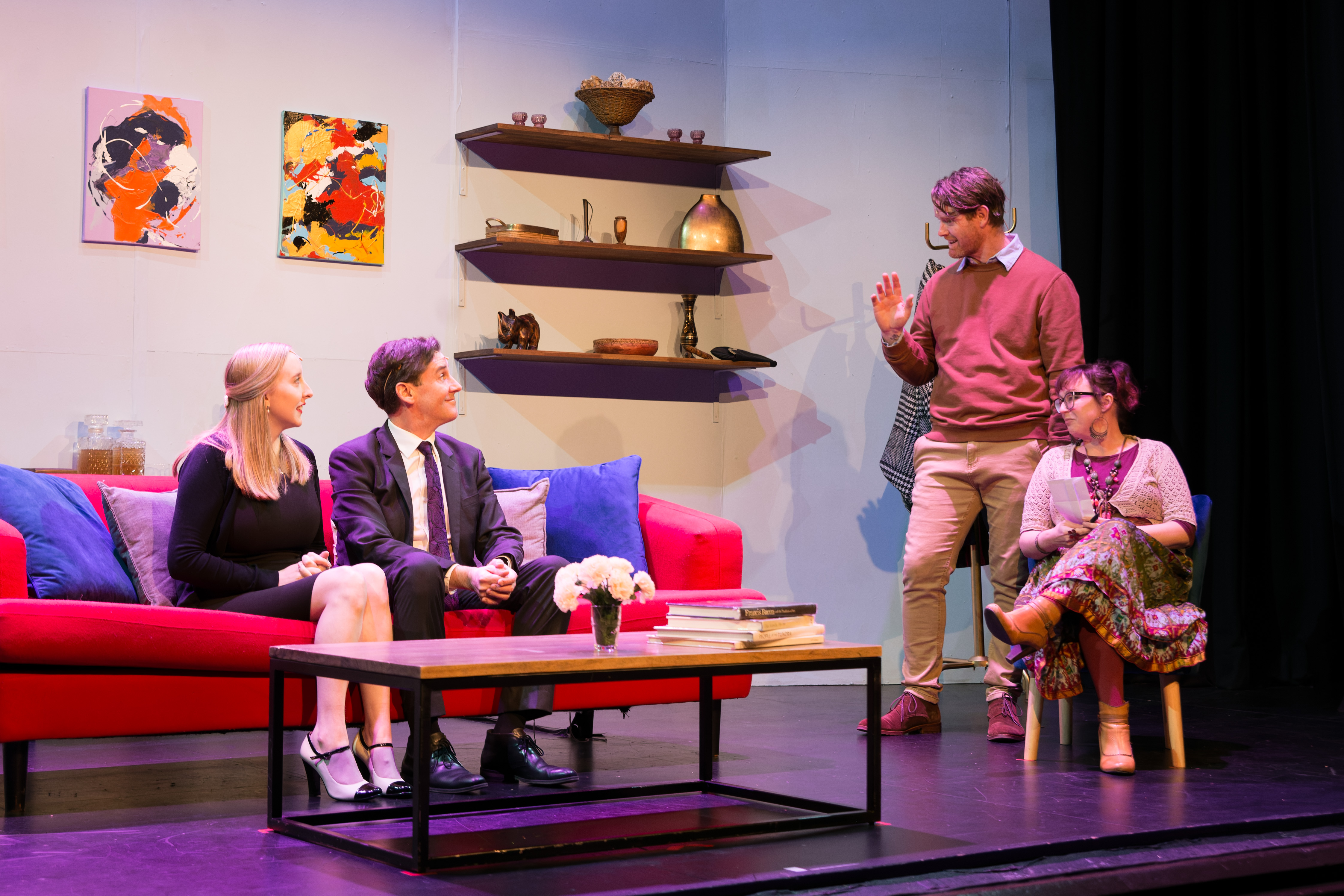
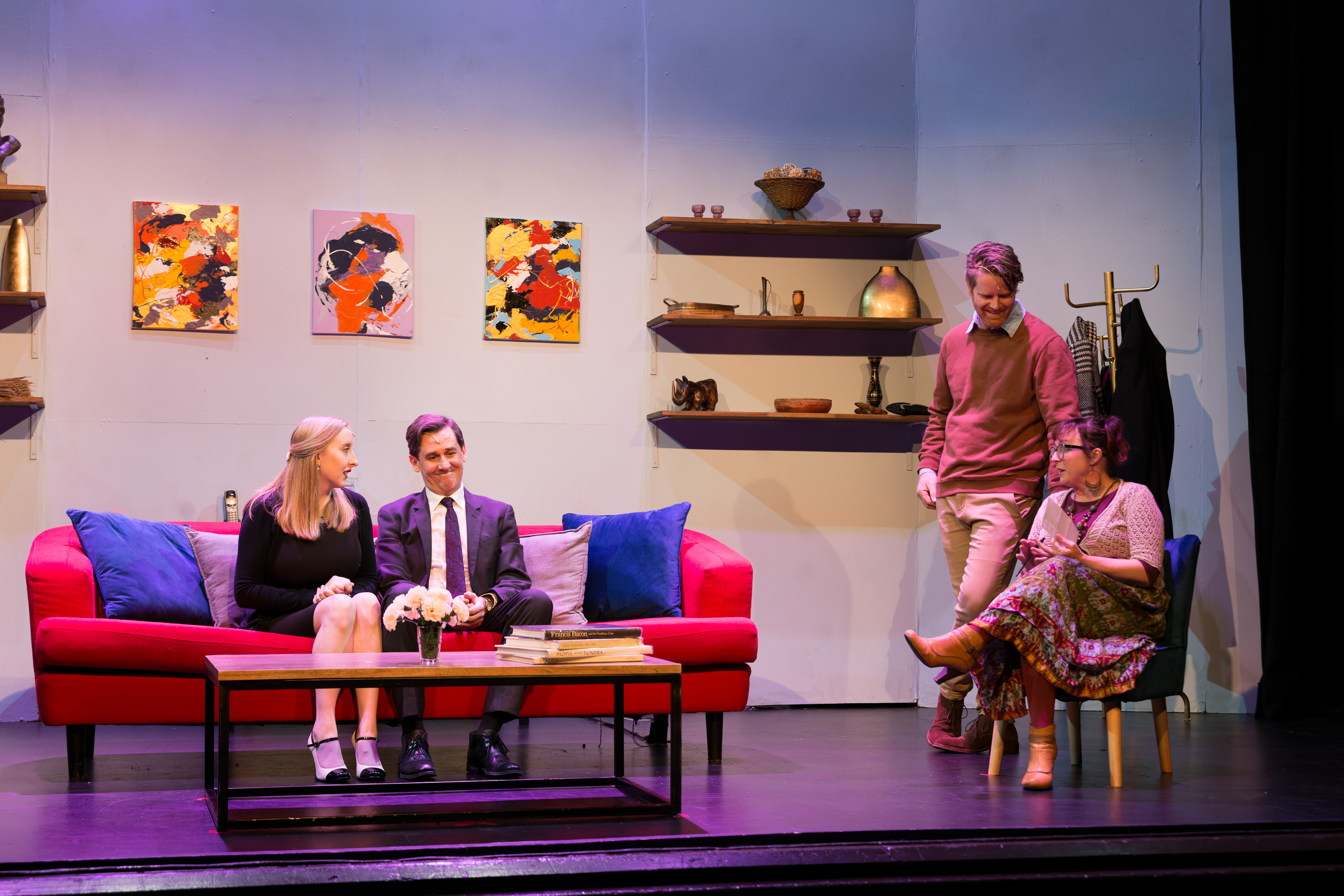
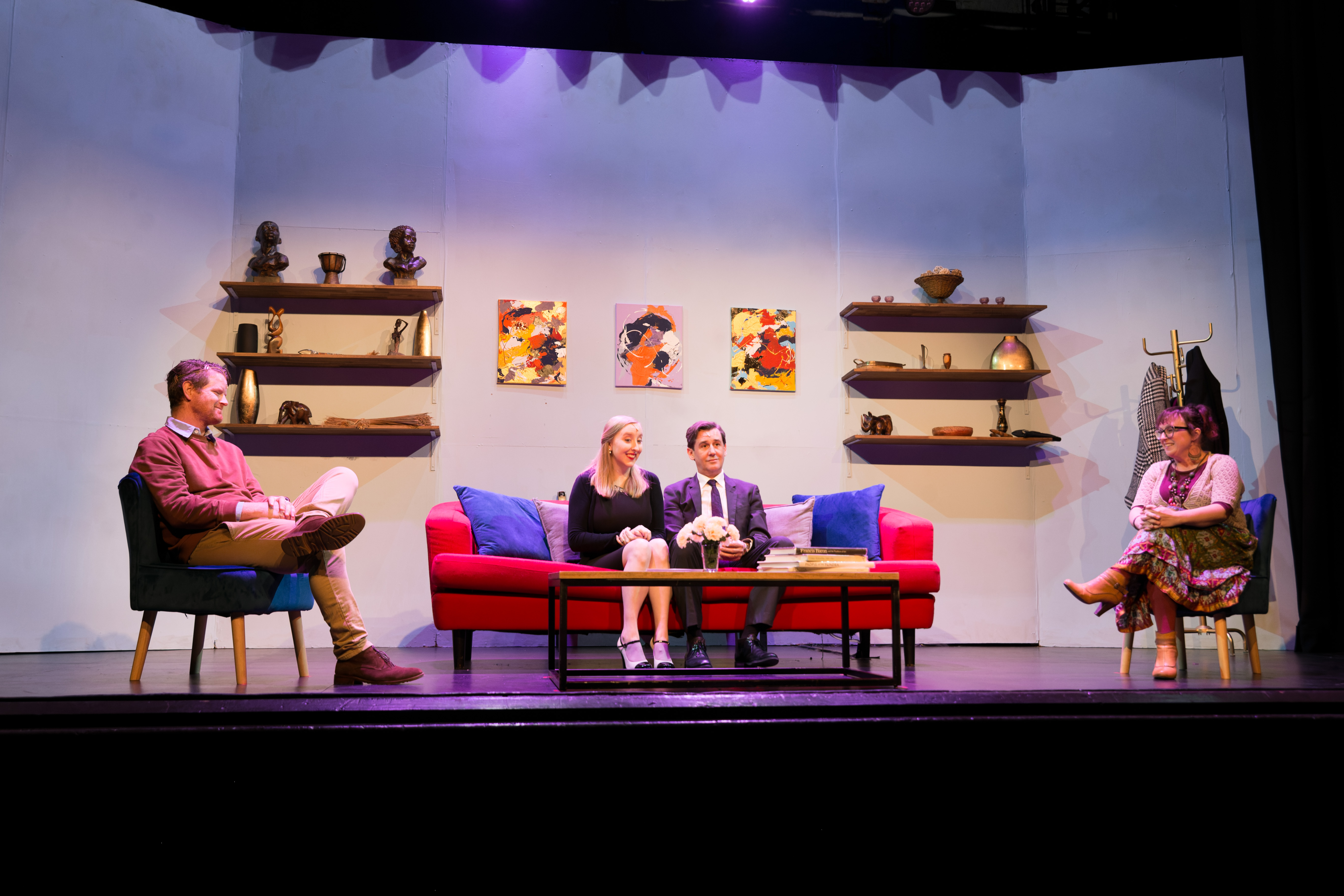
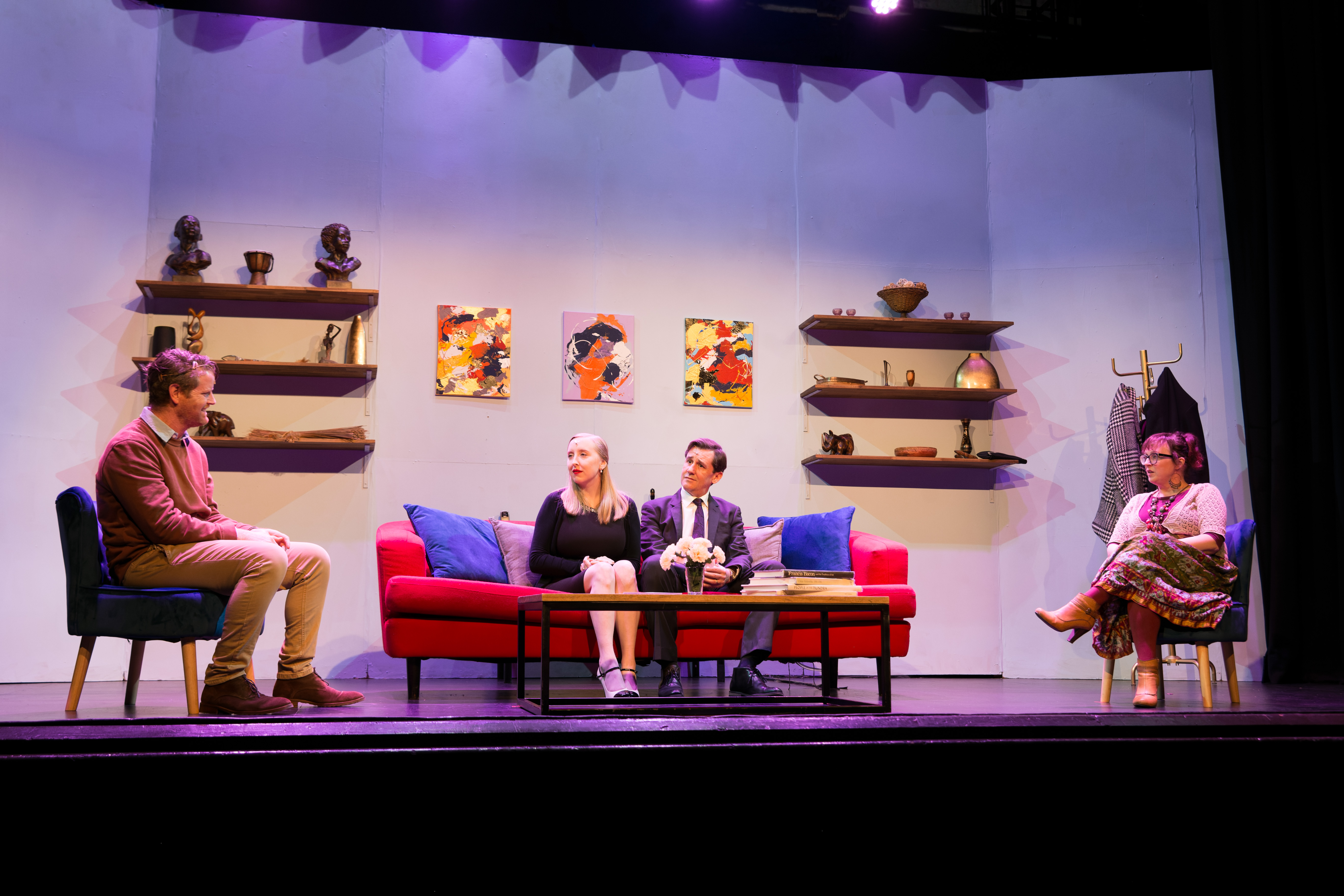
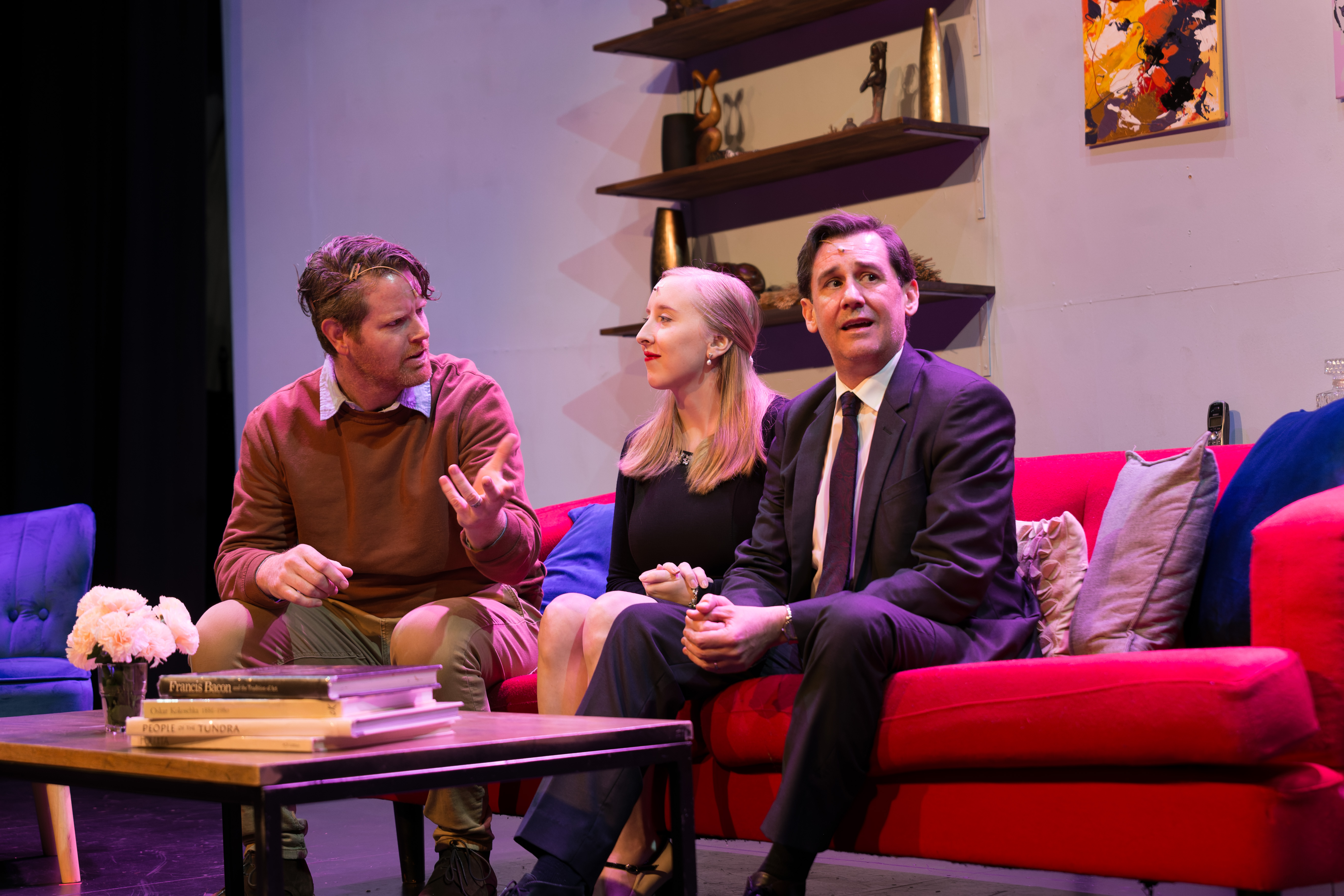
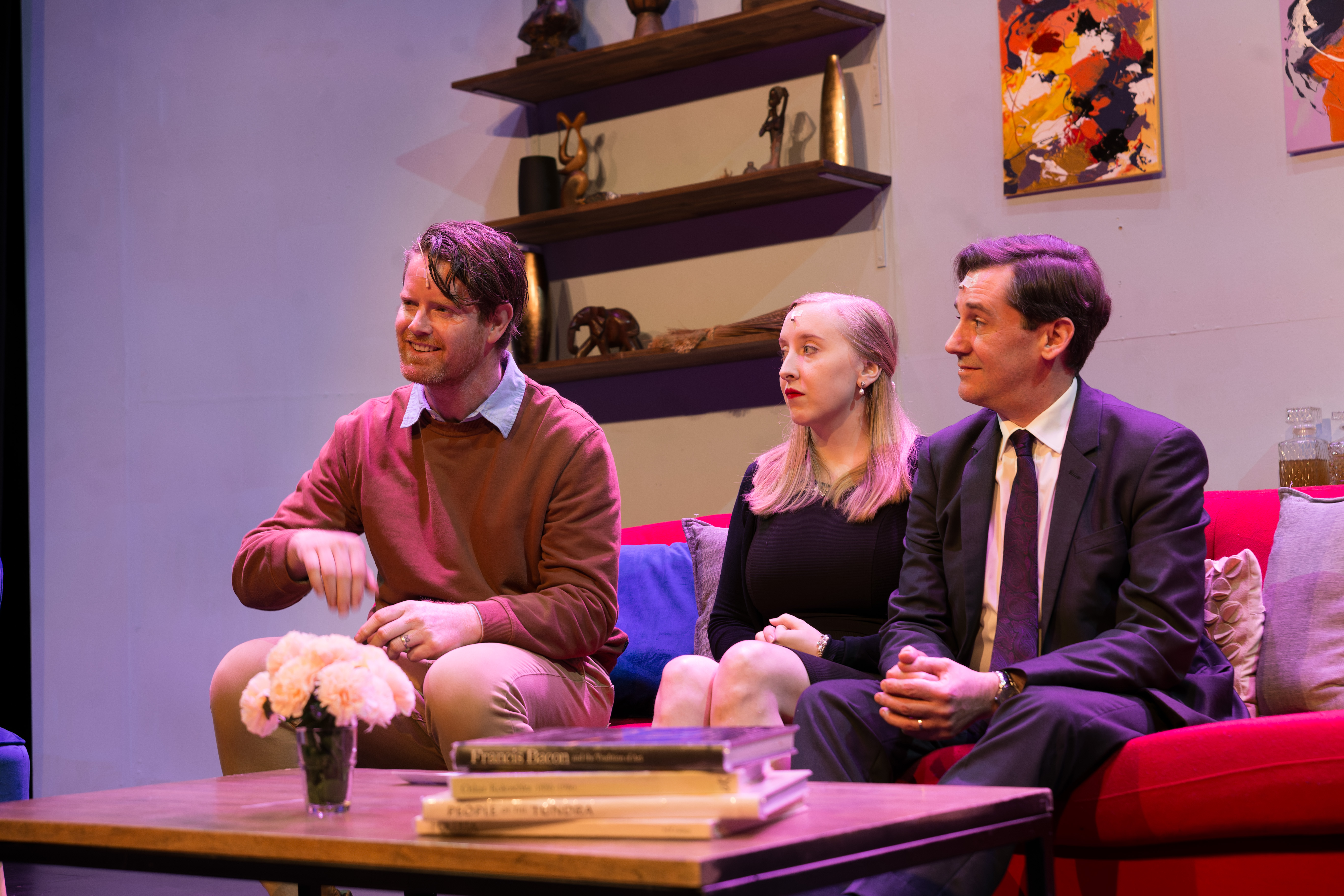
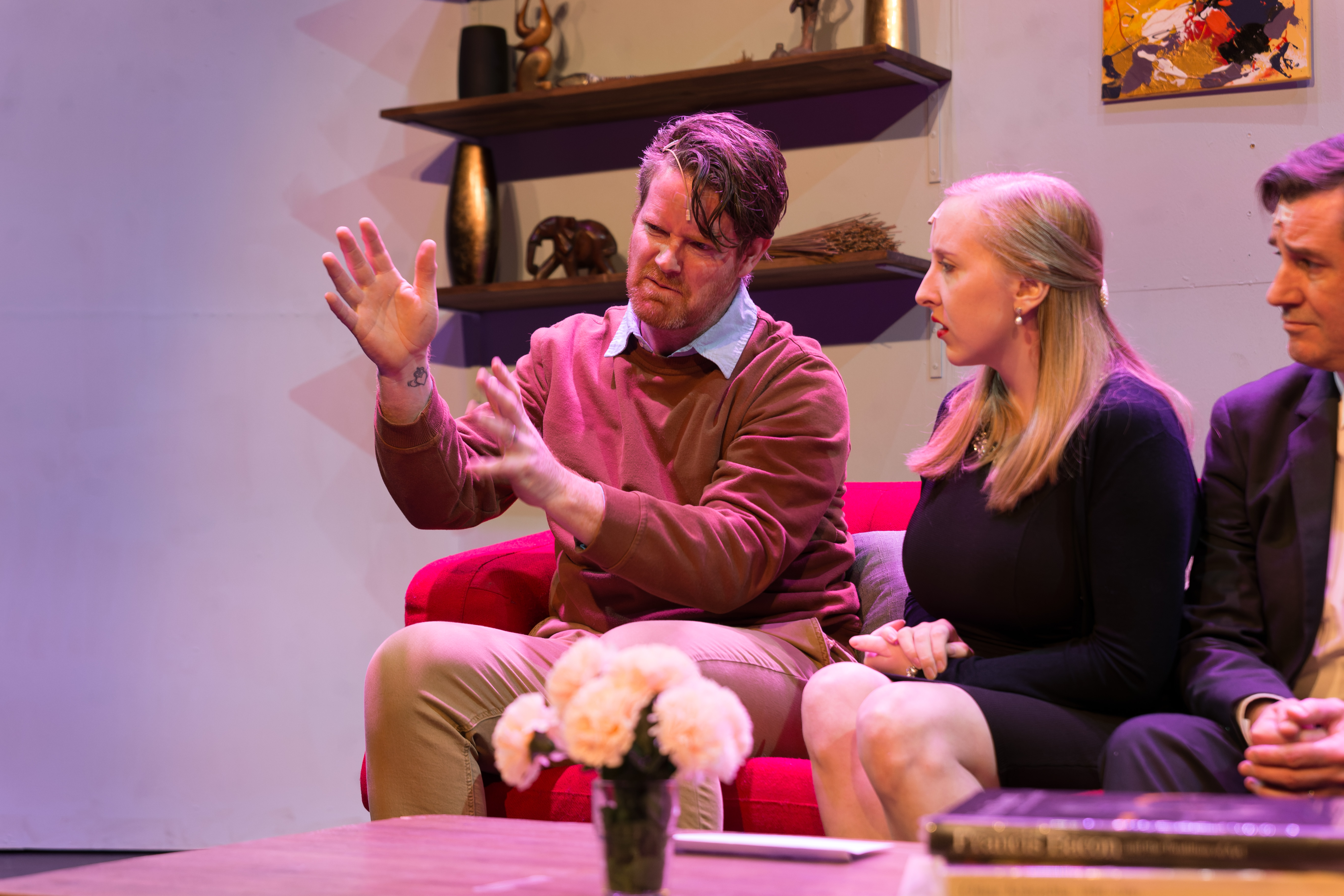
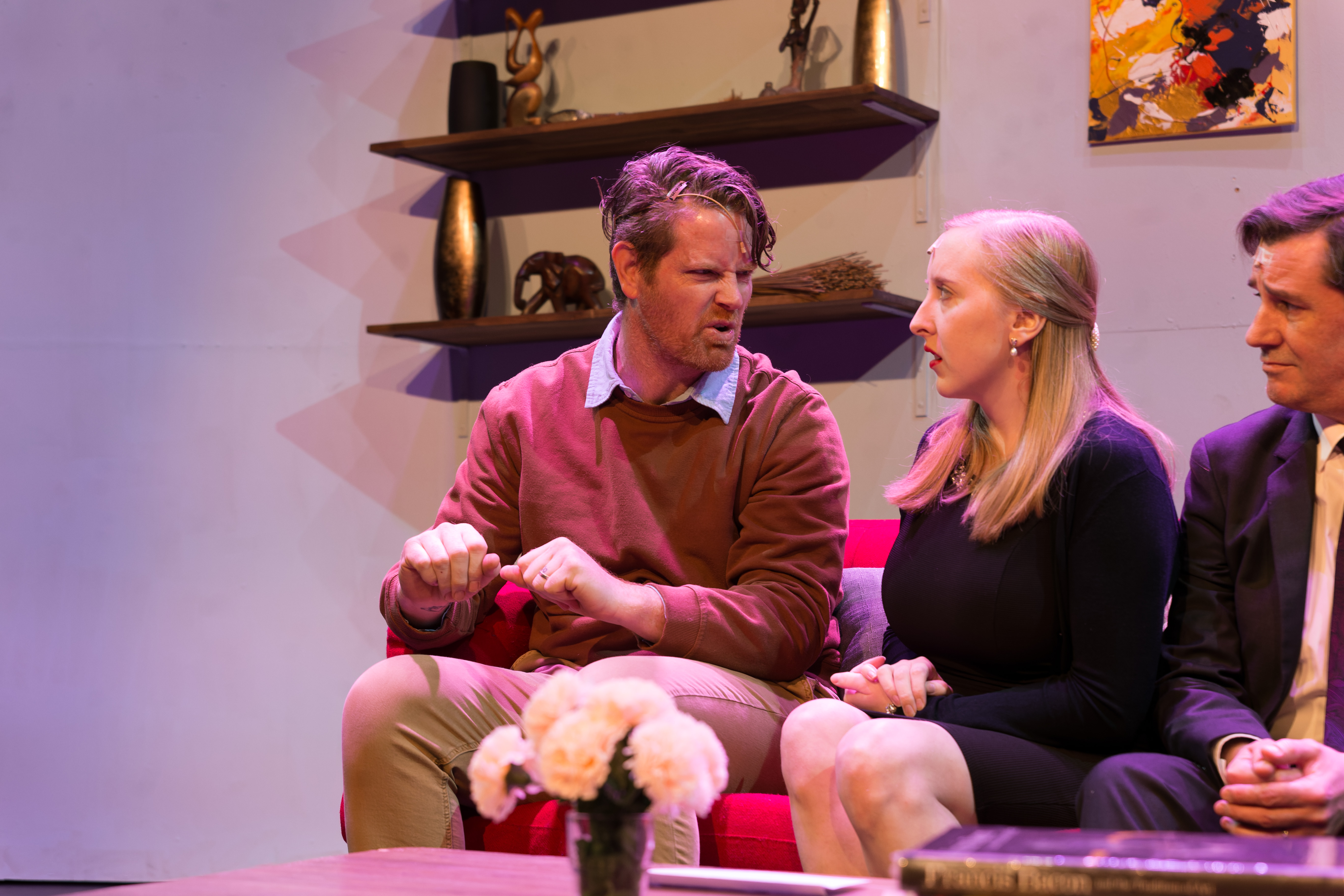
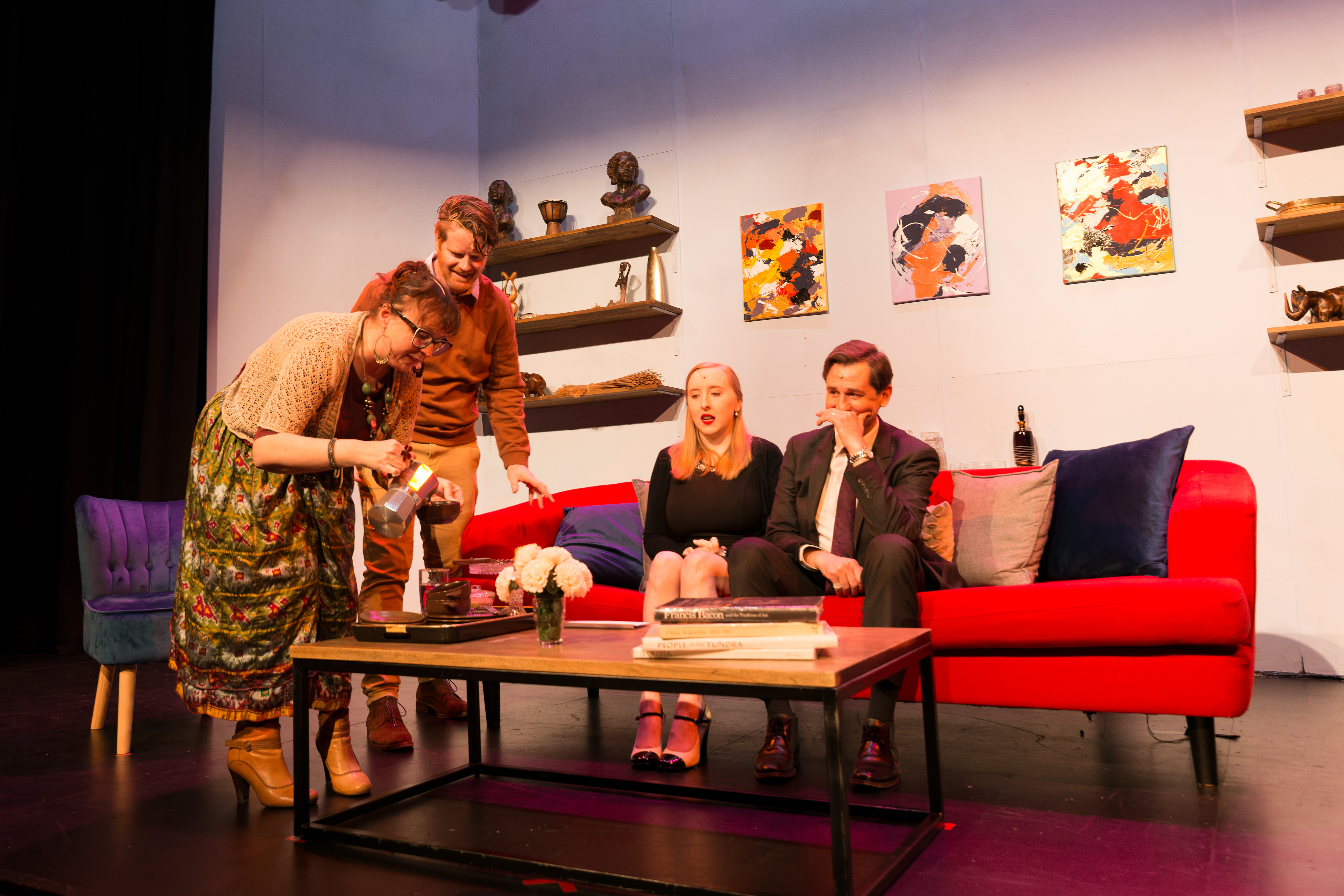
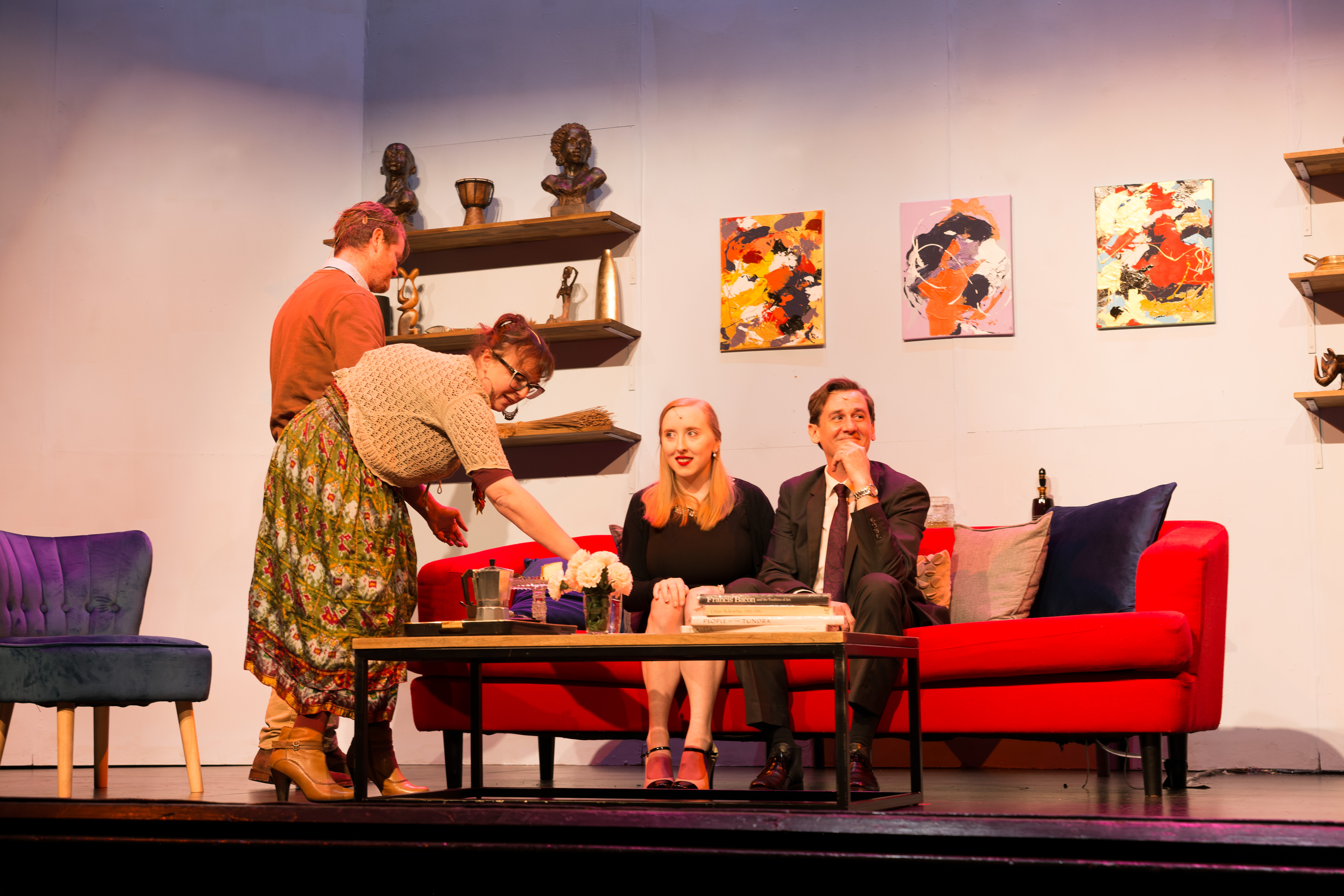
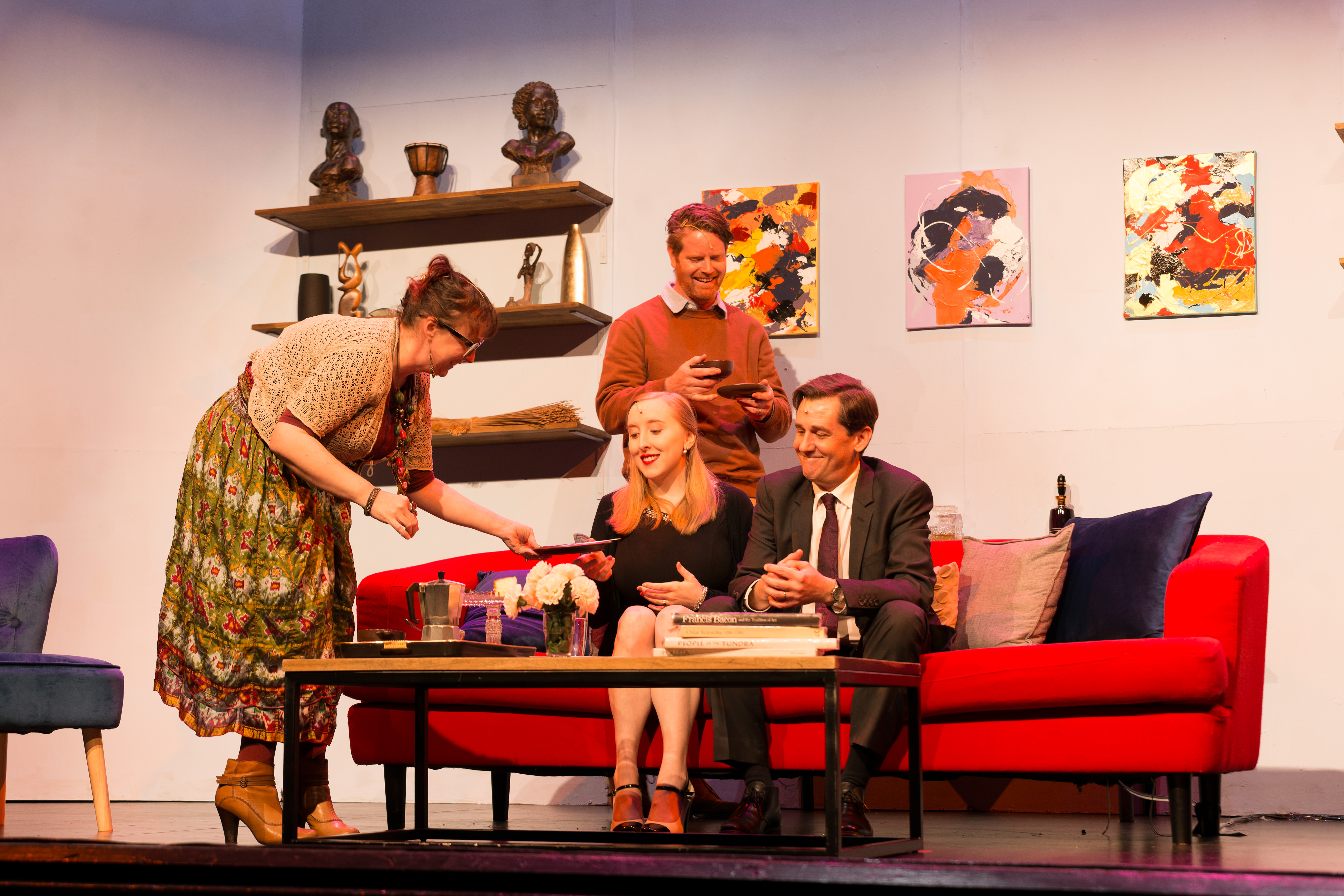
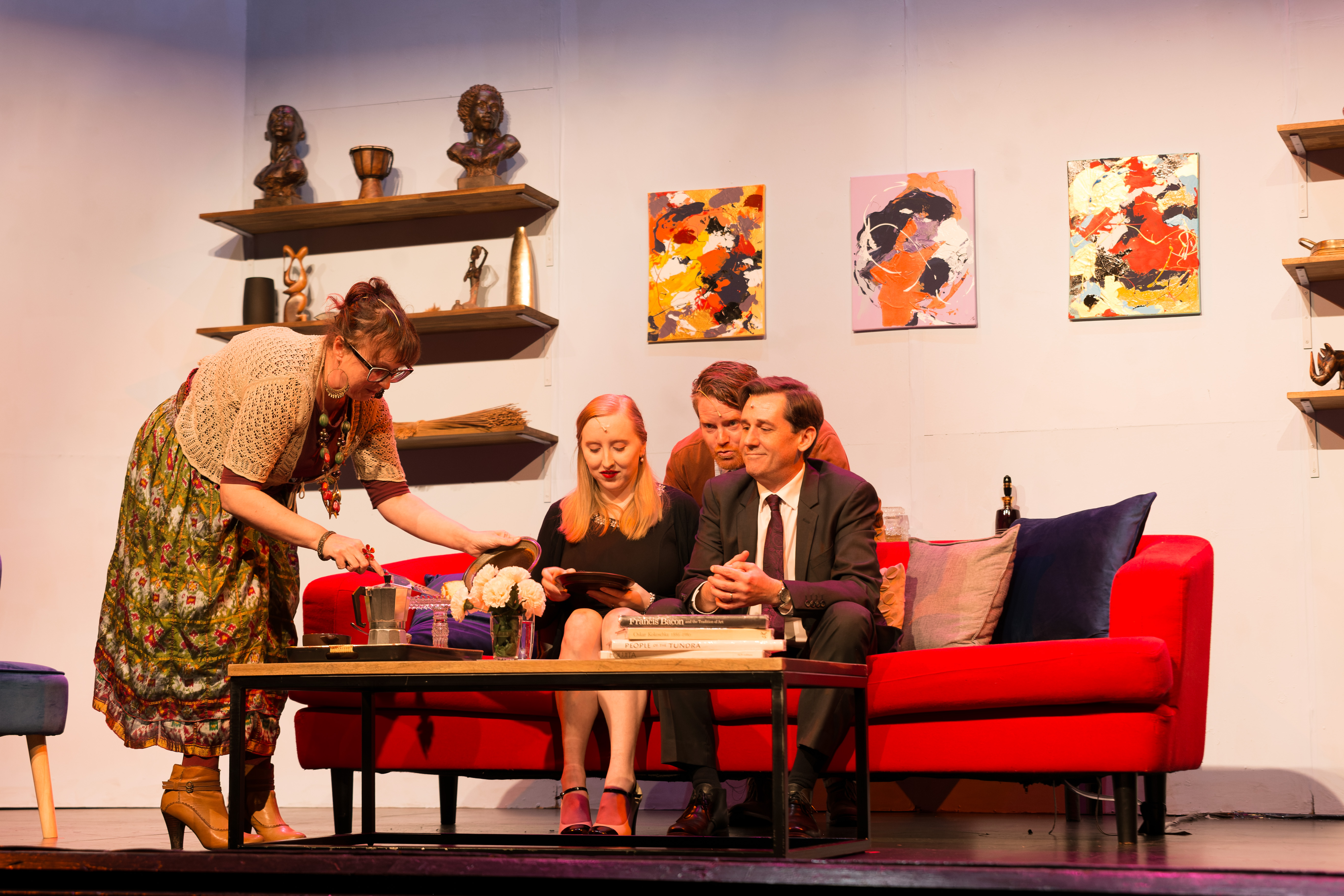
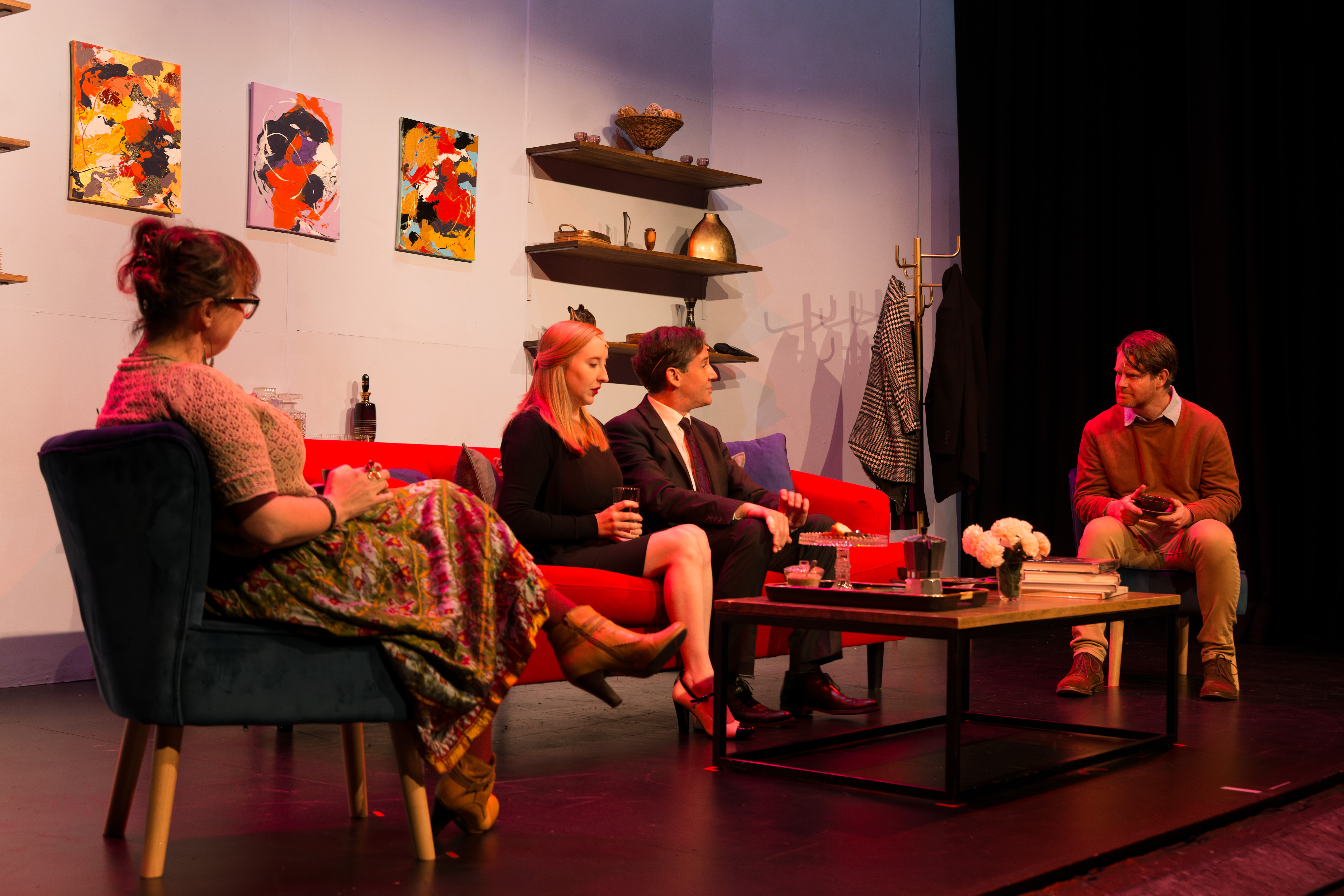
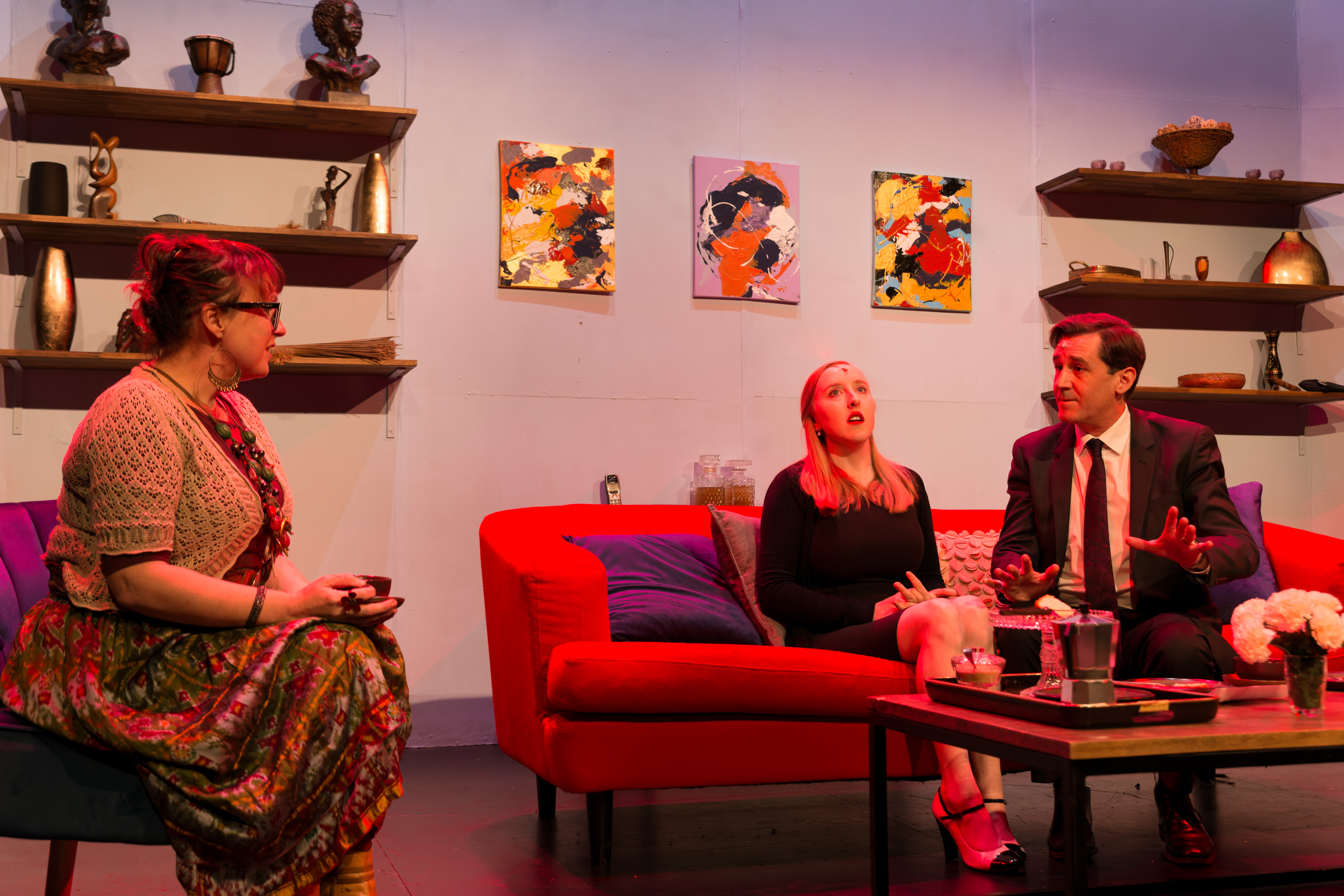
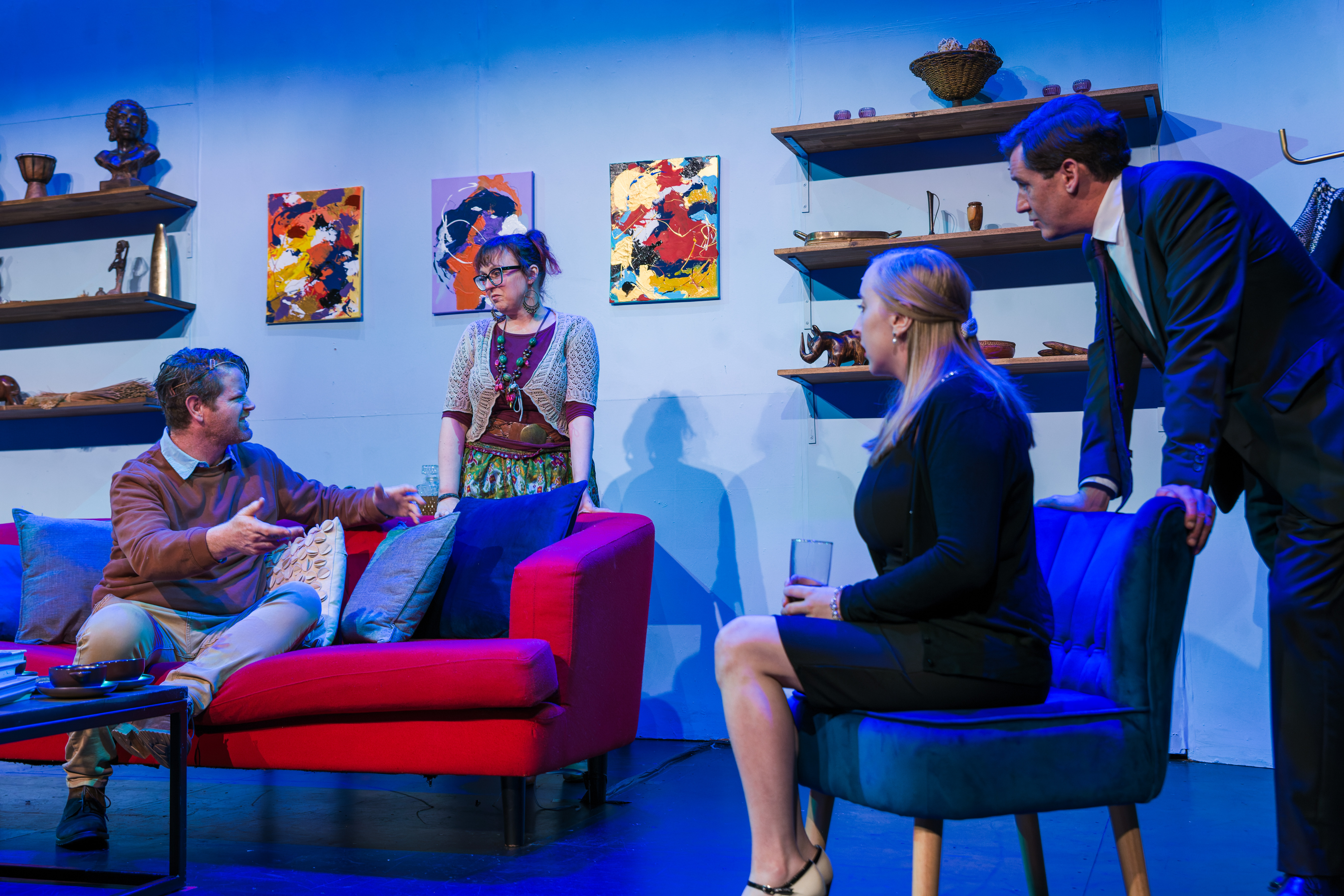
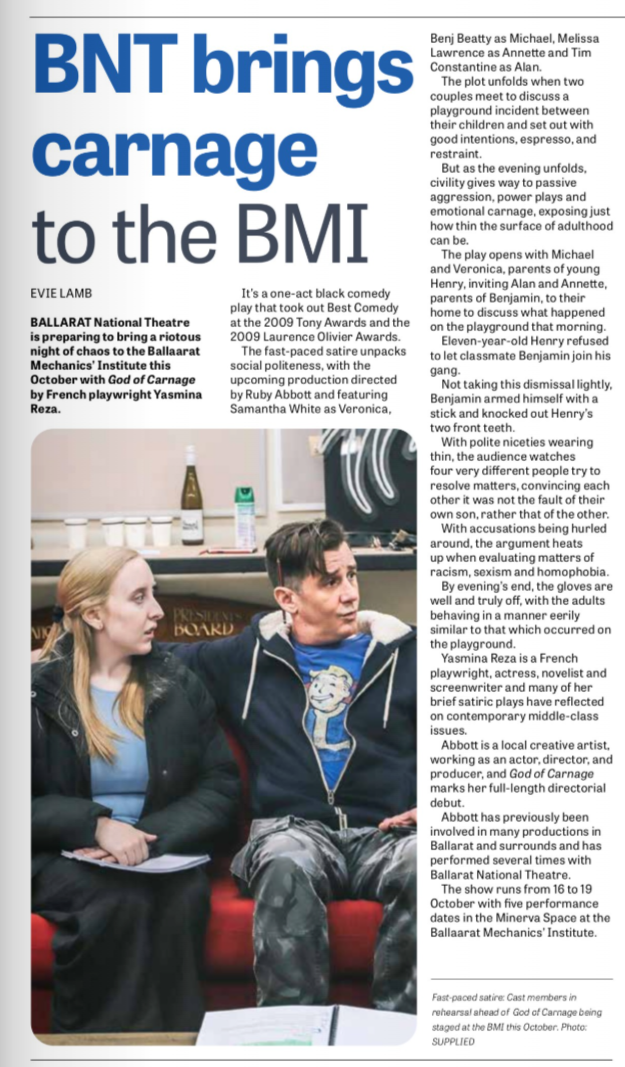
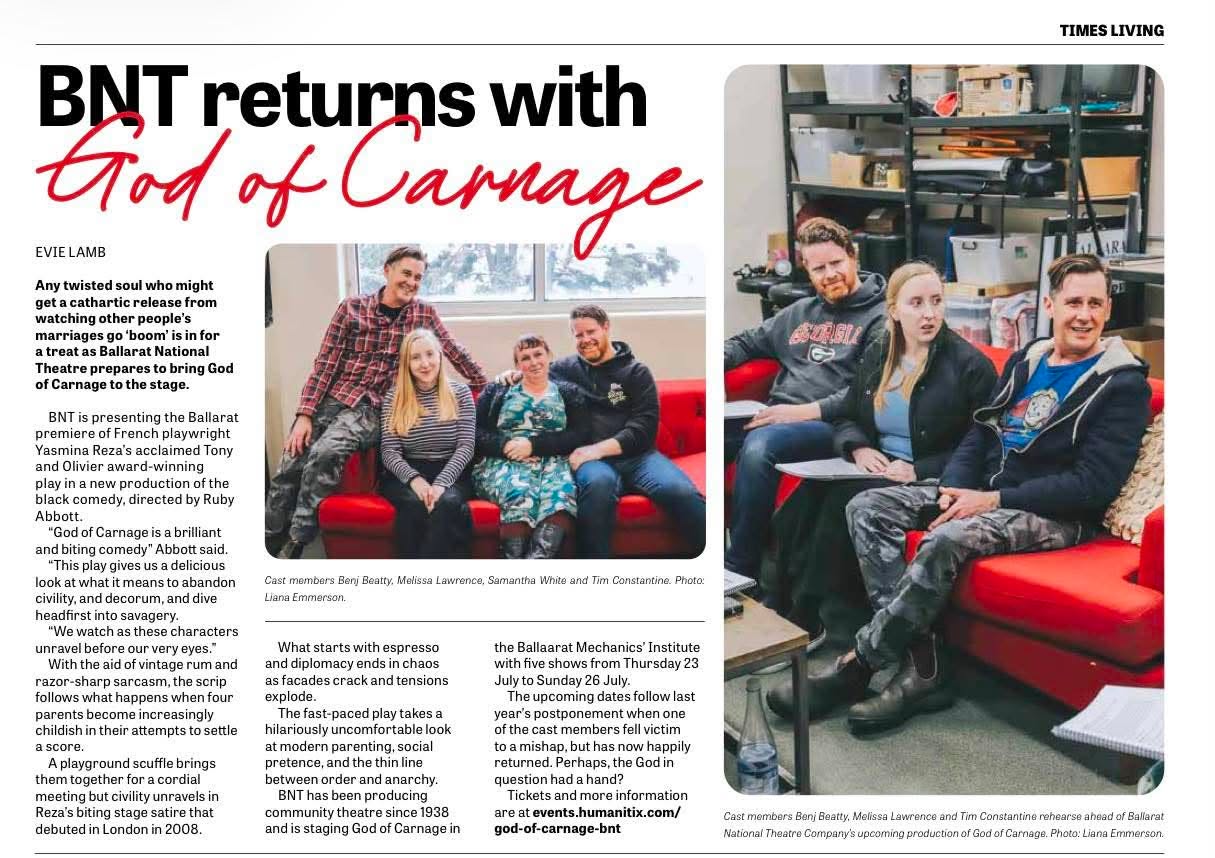
In the wonderfully restored, historic and beautiful Ballarat Mechanics Institute hall, the curtain actually rises on the four protagonists. They are in a modern domestic setting somewhere in Sydney. There is appropriate art on the wall upstage and simple, tasteful furniture allowing free interplay amongst the four characters. The set was designed by the director Ruby Abbott and constructed by Colin Abbott. The actors are wearing costumes sourced by themselves and reflective of their personalities and the times. Alan and Annette are played by Tim Constantine and Melissa Lawrence and Michael and Veronica by Benj Beatty and Samantha White.
At first, everyone behaves with exaggerated politeness. Annette and Alan express regret over Henry’s injuries. Veronica insists that she does not want to treat Benjamin as a monster; she merely wants him to understand the seriousness of his conduct and apologise directly to Henry. The four adults discuss dental treatment and the possibility that Henry’s damaged tooth might recover. Veronica serves coffee and a carefully prepared cake with African flavours. The guests repeatedly prepare to leave, but each time some new remark draws them back into the conversation.
This play is not about the boys; we never see them and they have probably already made up. It is about the relationships between the four parents. It is wonderfully written and exhibits the joys and tribulations of partnership and parenting.
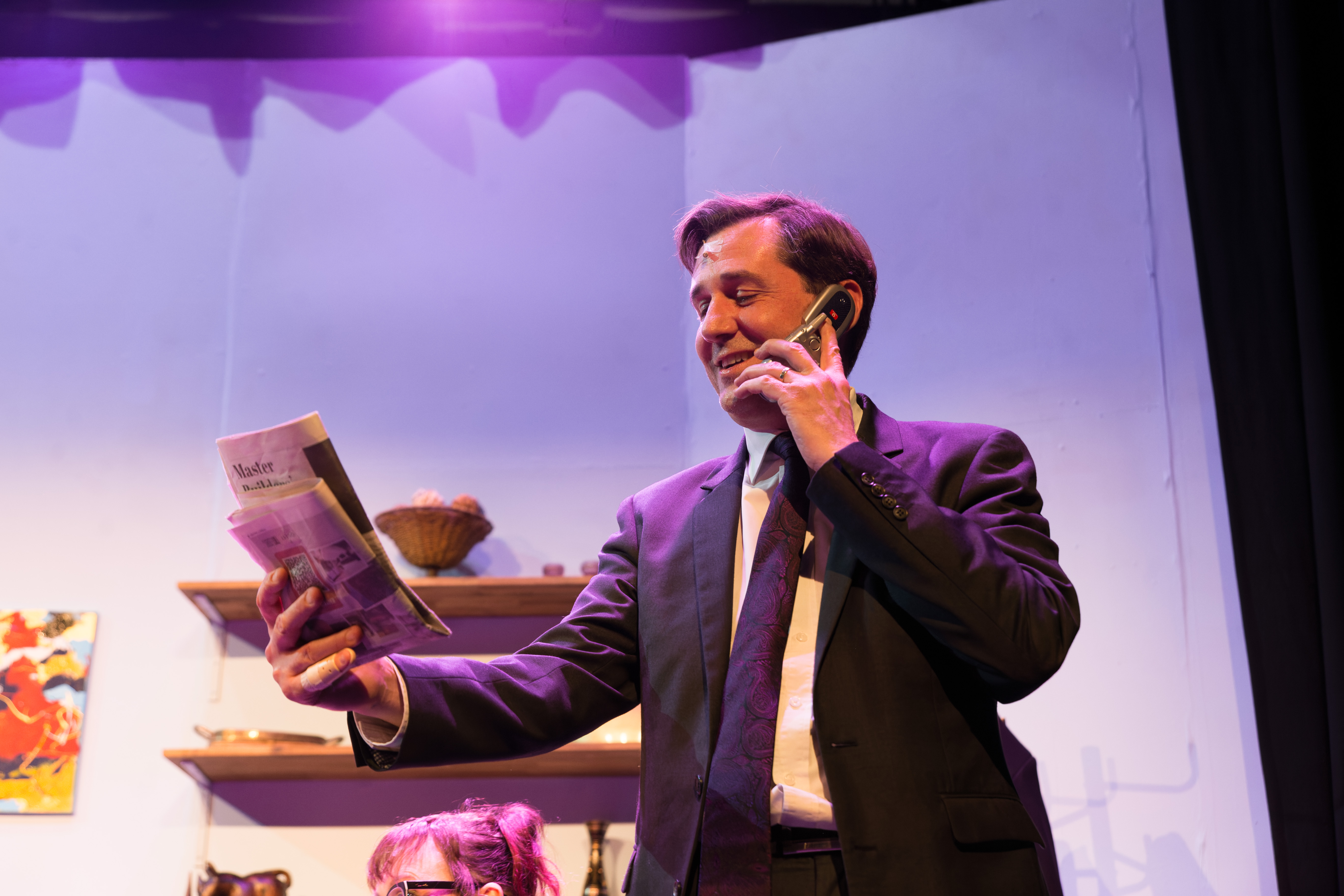
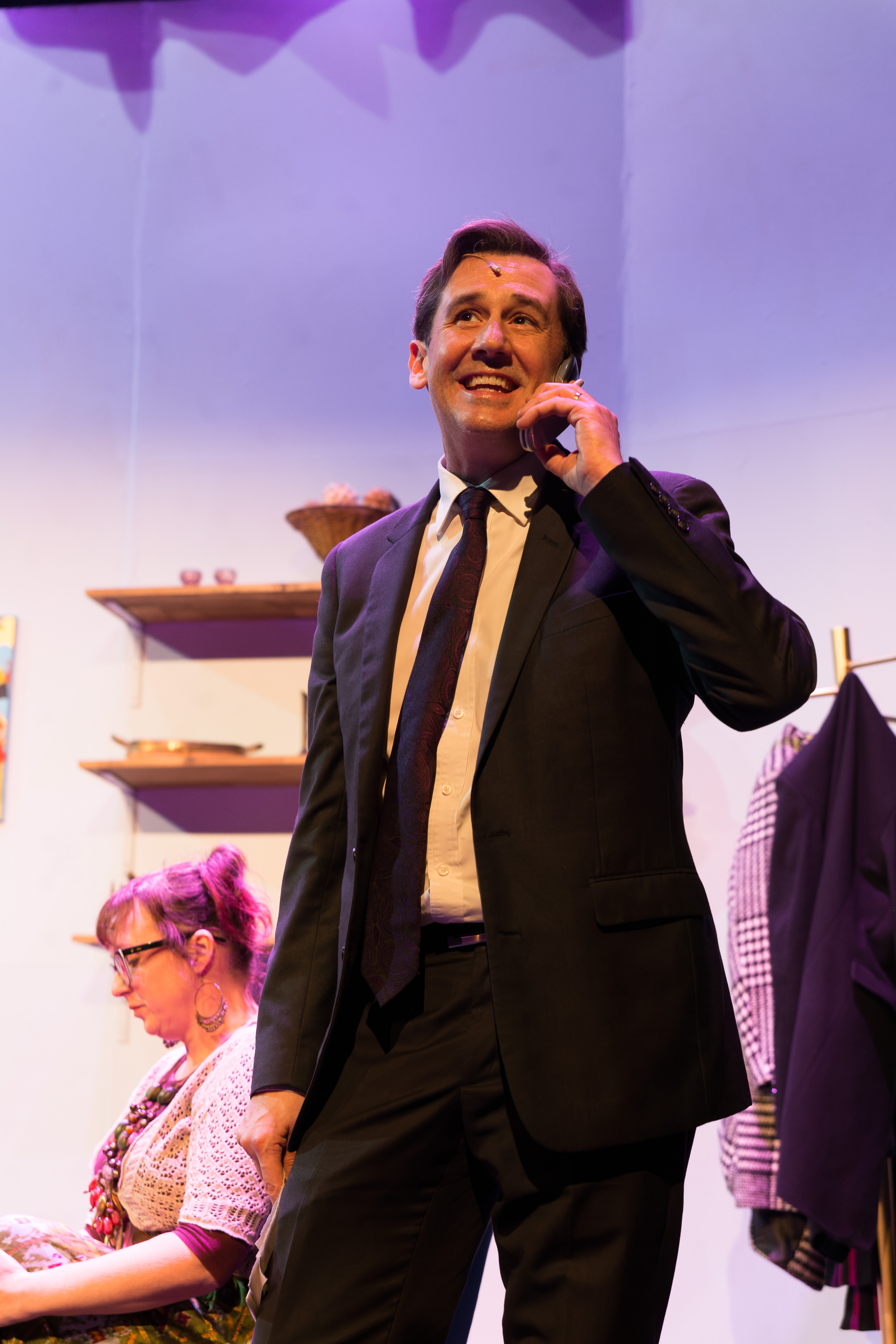
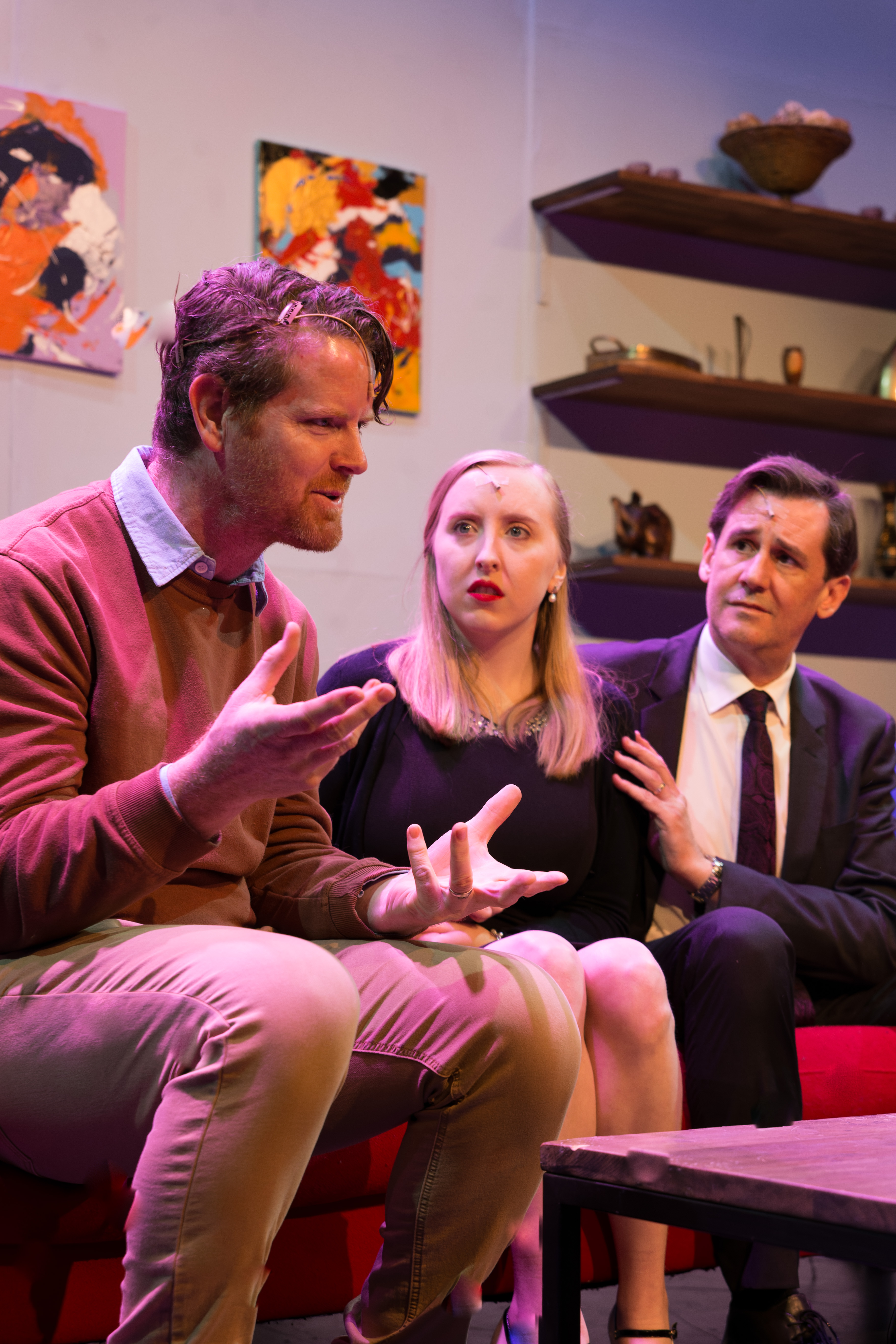
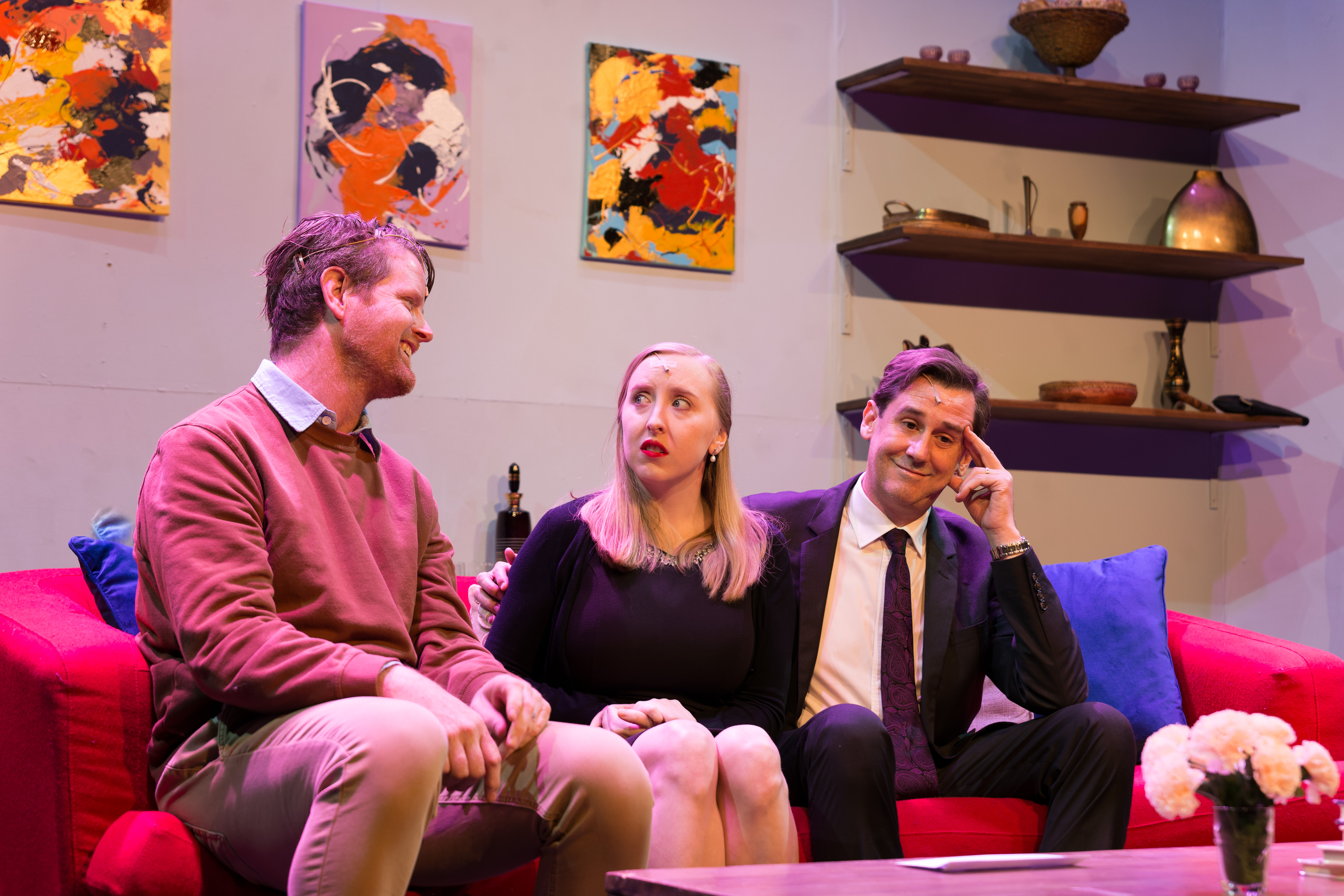
Alan is a lawyer and is involved in a class action about a commonly prescribed drug that has attracted some bad press. This means he is constantly interrupted by mobile calls. Tim’s take makes it clear that these calls expose Alan’s moral cynicism. He does not pretend that business or society is governed by fairness. For him, power and self-interest determine human behaviour. He openly mocks Veronica’s belief in humanitarian principles. Tim’s performance is energetic and accurate.
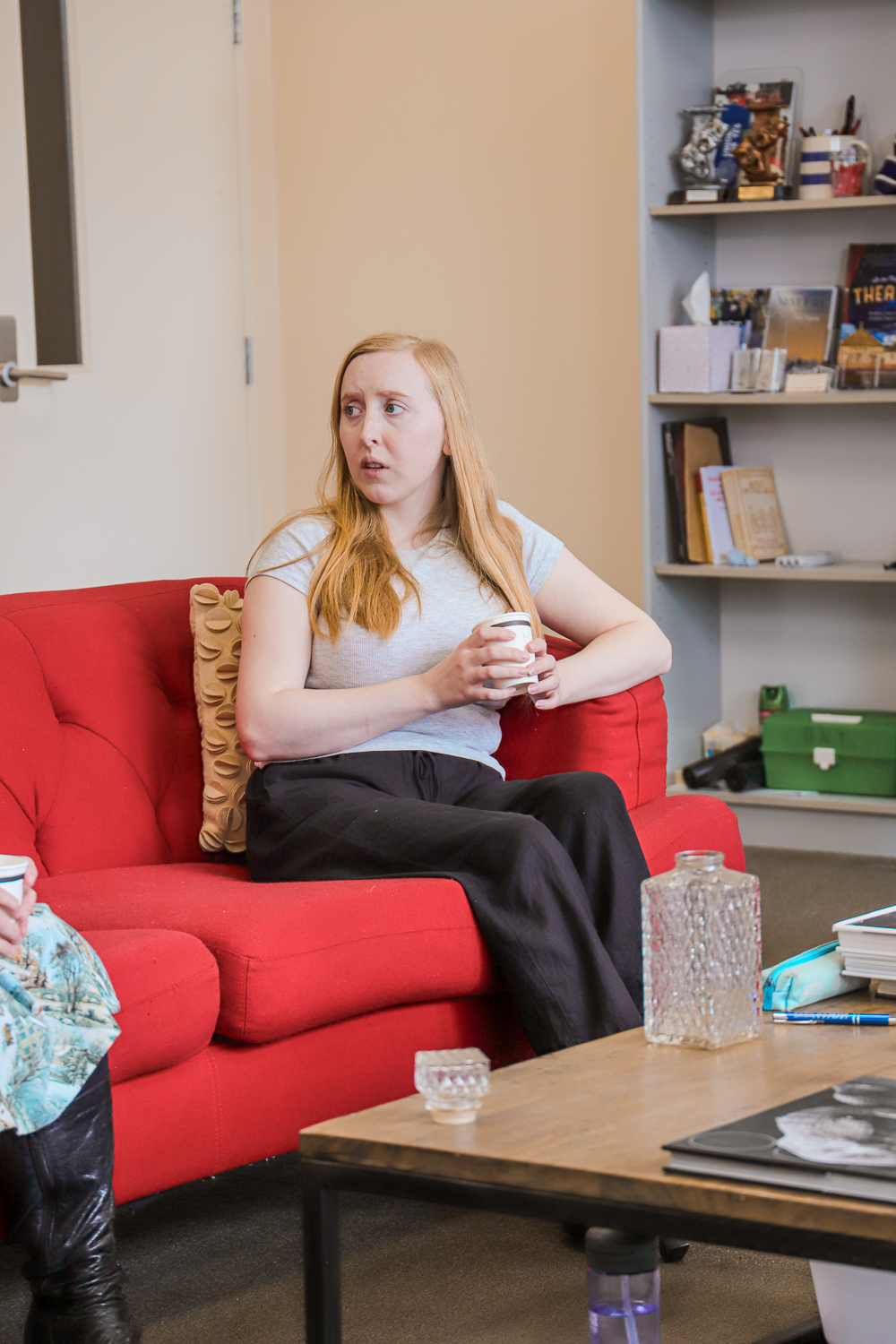
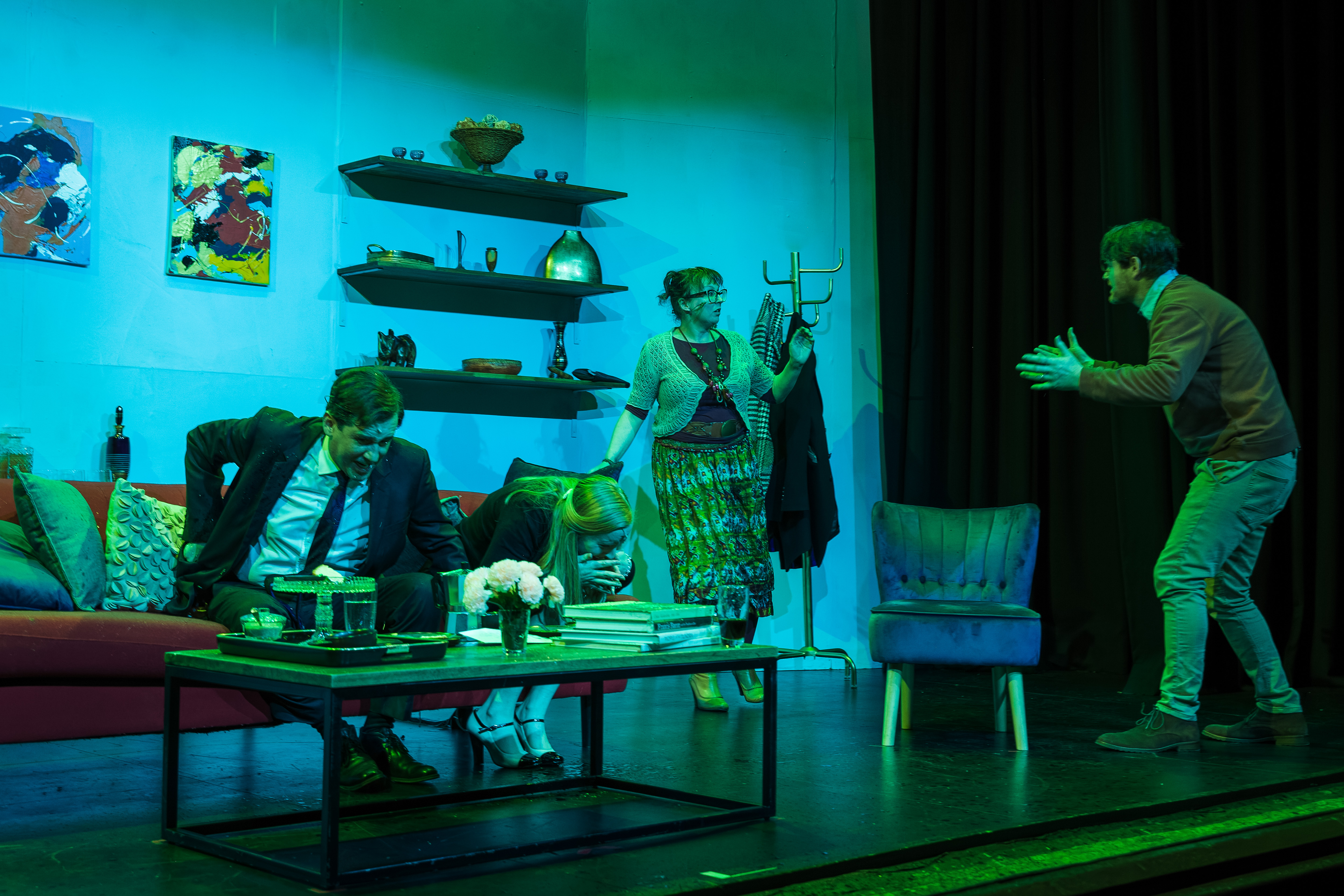
His wife is a sophisticated but nervous kind of person as shown by Melissa’s costume choice, a tight black dress. After a couple of coffees and Veronica’s African home-made cake Annette experiences a bout of projectile vomiting, the contents of which land on precious African volumes on the coffee table before her. This provokes a flurry of cleaning and great ensemble panic from the four of them. The physical eruption destroys the atmosphere of controlled politeness. Melissa convincingly portrays her deep embarrassment, Veronica is distressed about her books, and Alan continues to answer his telephone. The adults begin drinking alcohol—Michael produces a bottle of expensive rum—and their remaining inhibitions weaken.
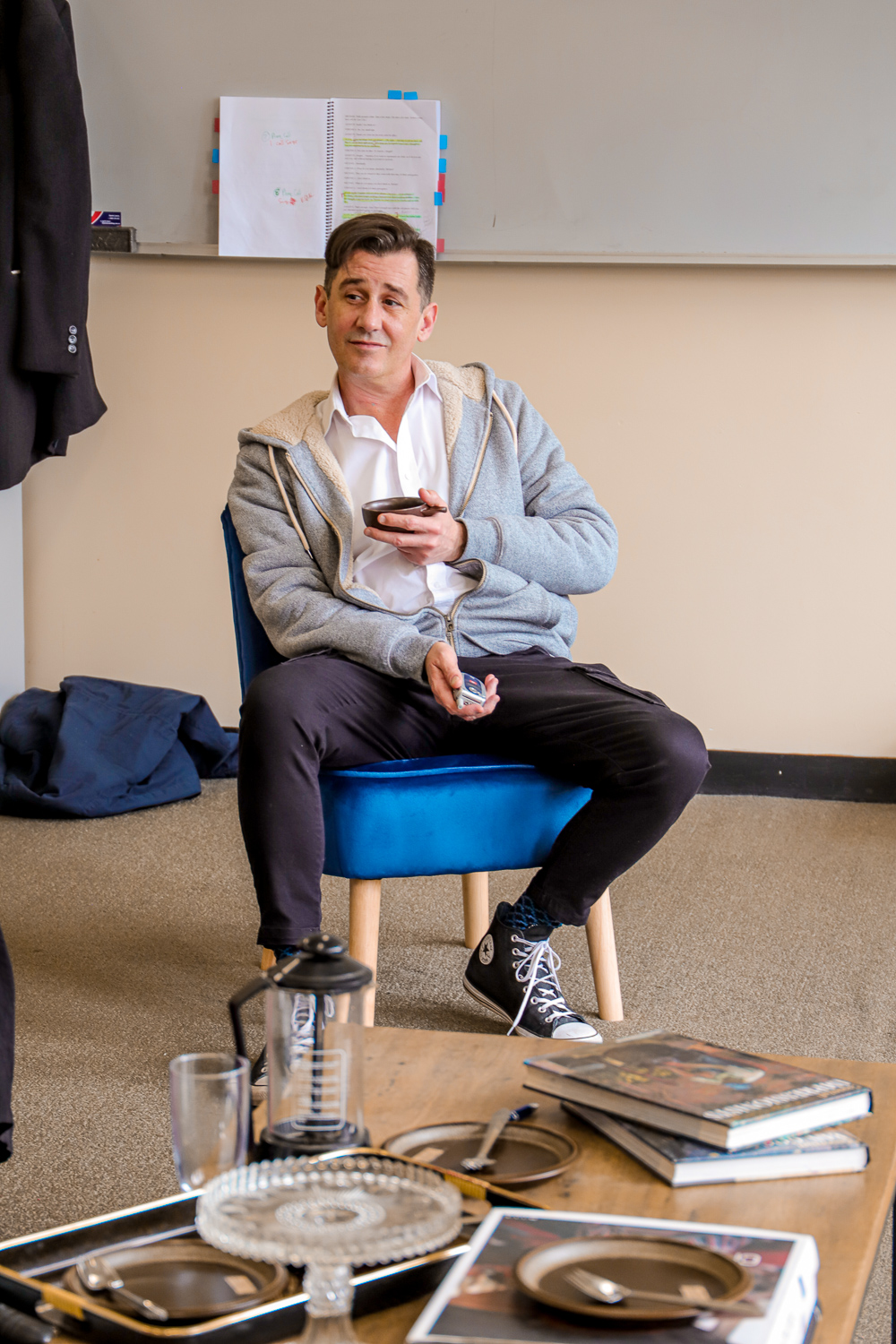
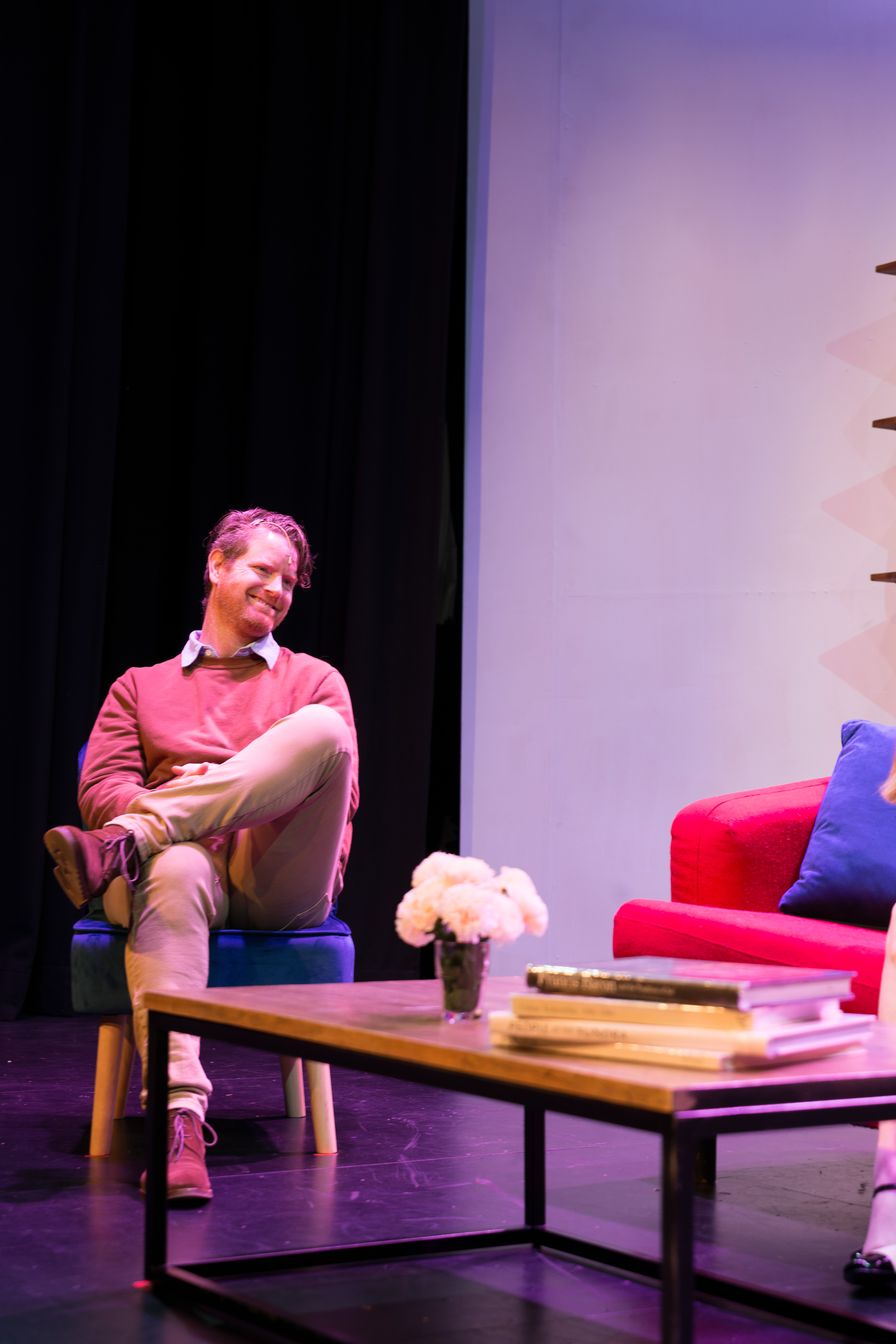
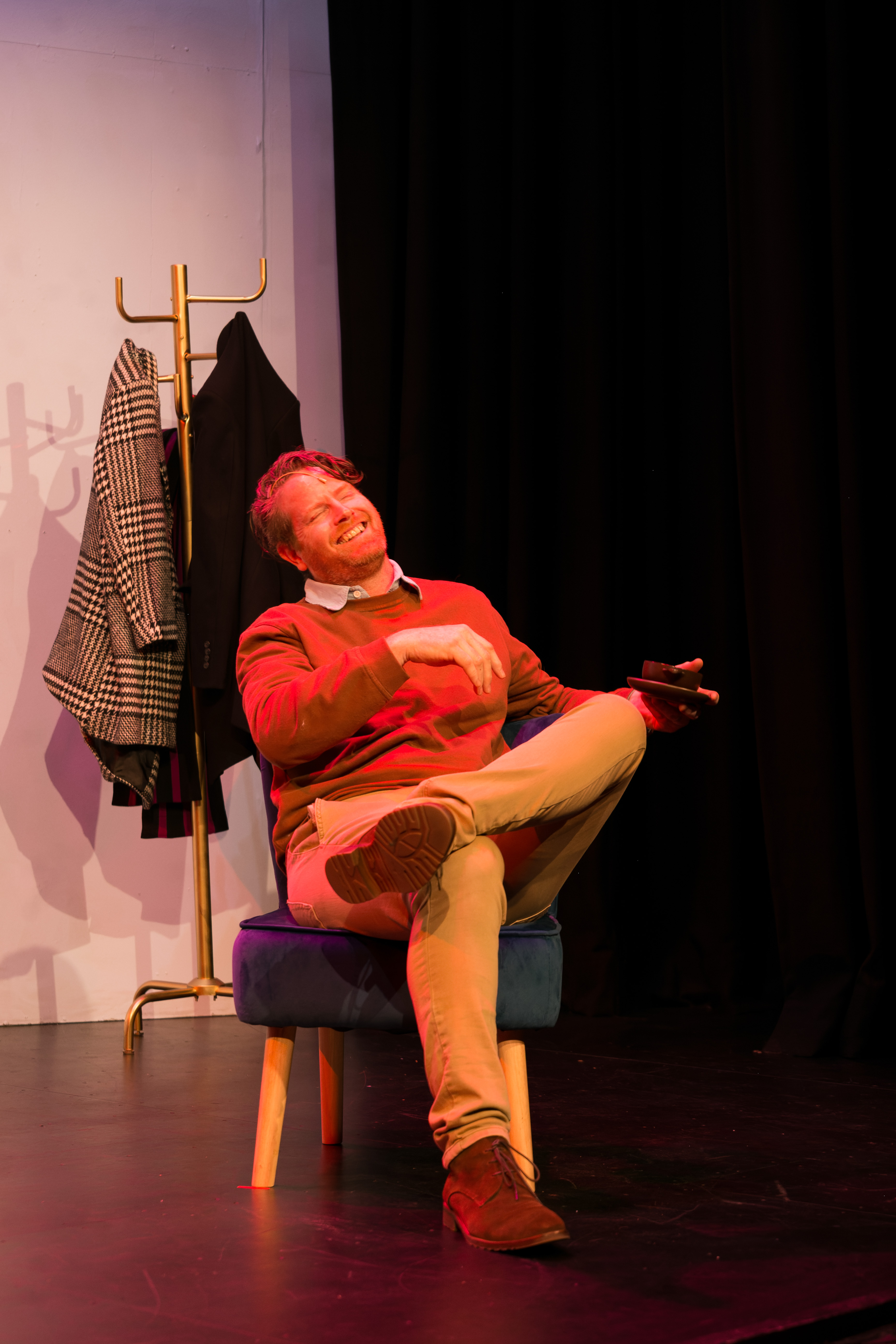
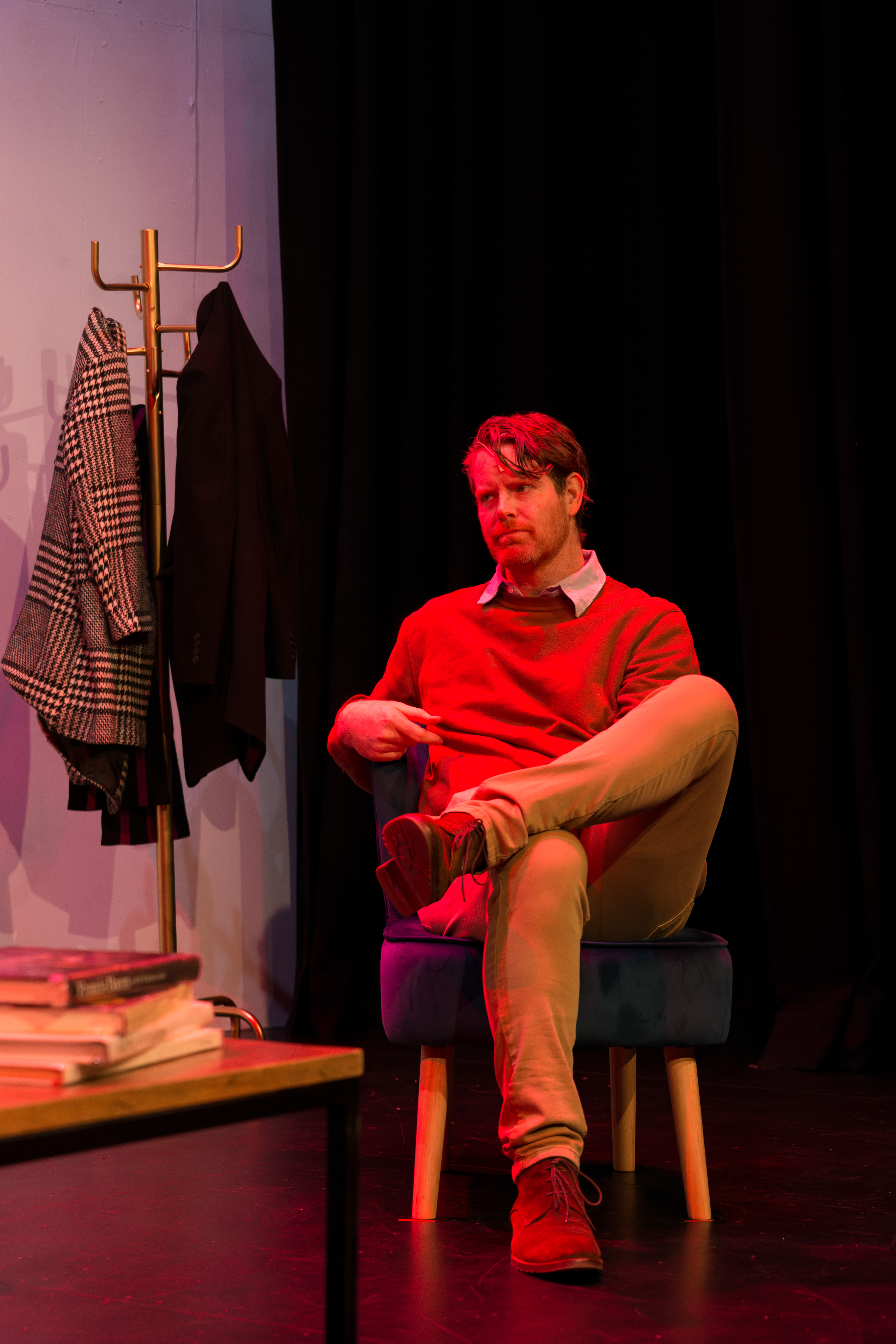
Michael is a salesman/manager specialising in retail sale of building materials. This is an excellent performance from Benj whose casual clothes reflect his down-to-earth attitude and pragmatic attitude to life. He argues logically and unemotionally about the boys and shows genuine love for his wife. When the first drinks are handed round he does not offer one to his wife. He knows she is about to commit an in vino veritas moment.
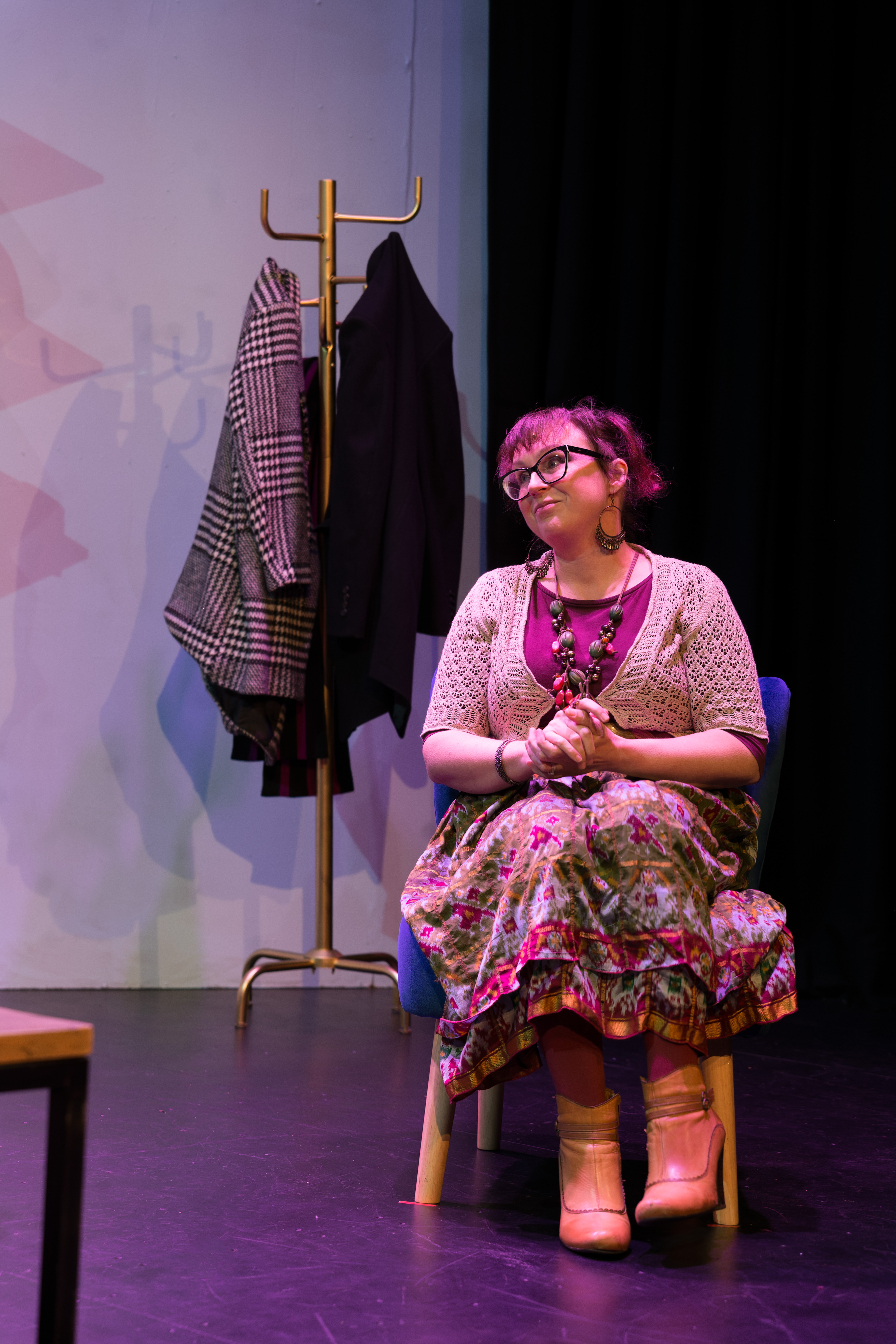
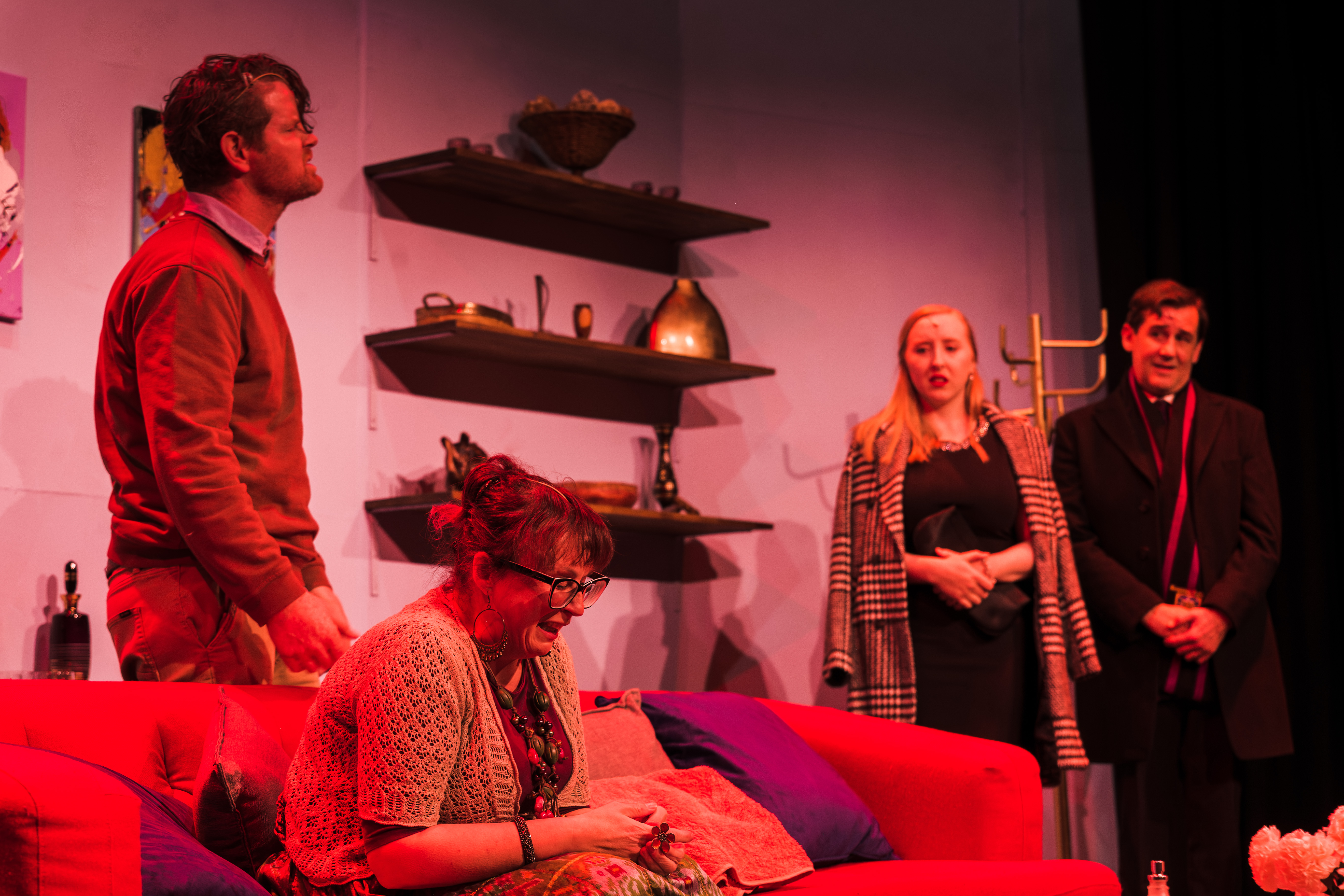
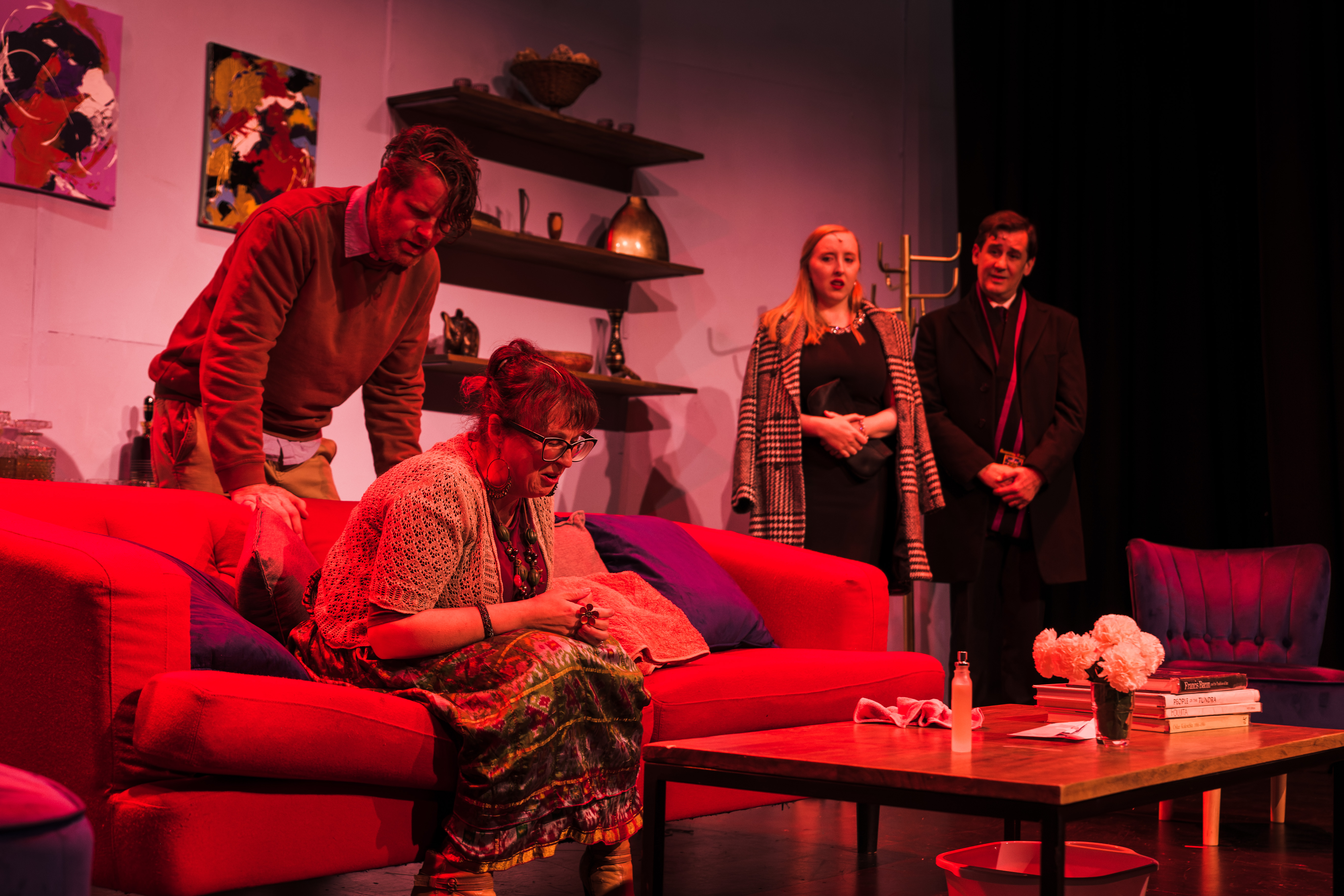
Samantha has played quietly until now in her ordinary, unfashionable get-up; dangling African adornments are prominent in this garb. She has shown Veronica to be placid and agreeable and smitten with the culture and neediness of African people. But, as the rum swilling accelerates, she uses the full force of her unexpectedly extensive vocabulary to convey her real feelings about the dispute concerning the boys. This believable transition is expertly executed by Samantha.
The highest praise must go to director Ruby Abbott whose tutelage of her talented cast is evident in every moment. Her sound design and operation has the actors individually, but invisibly, miked. This ensured their audibility throughout.
The central irony of the play is that the children’s fight lasts only a few seconds, whereas the adults’ supposedly mature attempt to resolve it releases a bit more hostility. By the end, it is difficult to say who is more governed by the “god of carnage”: the boy who wielded the stick or the parents who came together to assess his actions.